
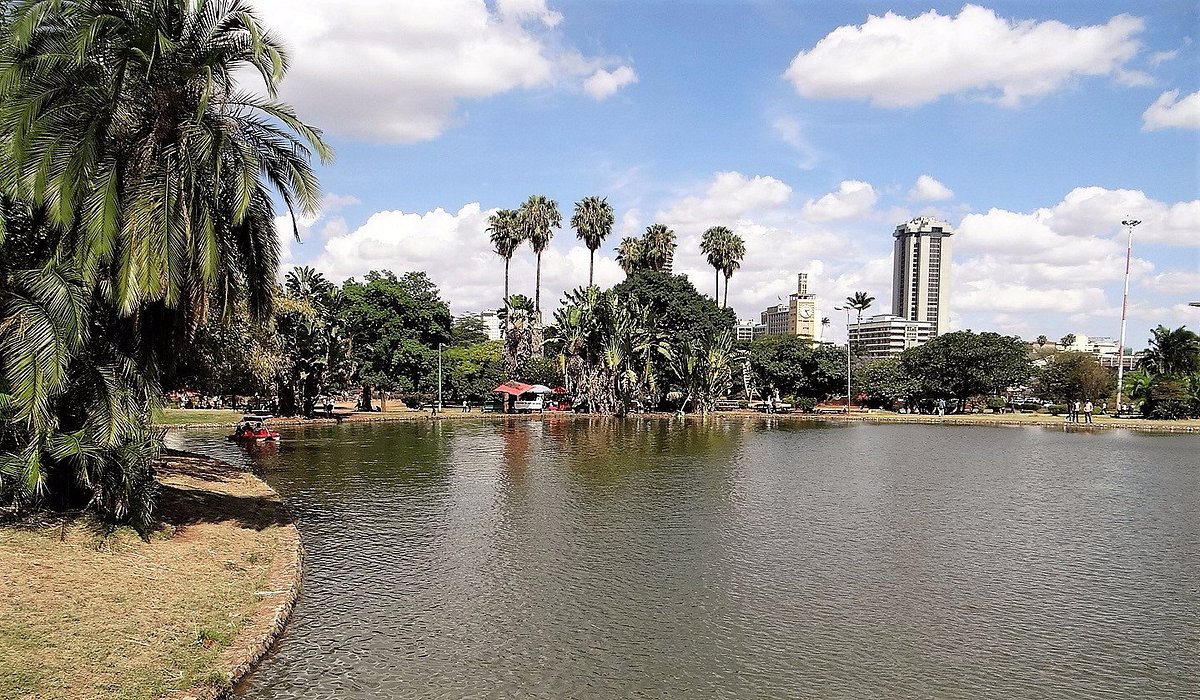


In 1989, Uhuru Park was almost replaced by a major development.
Not reduced.
Not slightly altered.
Replaced.
A large commercial complex had been proposed in the middle of the park. A multi-storey development linked to political and media interests, with offices, commercial space, and large-scale infrastructure that would have fundamentally changed the space.
At the time, Uhuru Park was already one of Nairobi’s central public green spaces.
But that did not prevent it from being considered for redevelopment.
The proposal quickly drew concern.
Not only about construction.
But about public land.
Who it serves.
How it is used.
And what happens when it is repurposed.
Wangari Maathai, alongside other citizens and groups, began to challenge the project. This was not a single protest. It was a sustained effort. Letters were written to government offices, media outlets, and international organisations. The issue was raised publicly and repeatedly.
Attention was drawn not just to the project itself, but to what it represented.
The response from within the system was not supportive. When the matter was taken to court, the case was dismissed. The ruling stated that she did not have the legal standing to bring the case forward — meaning the court did not recognise her as directly affected by the proposed development. In effect, the challenge was shut down at that level.
But the effort did not stop there.
The strategy shifted.
Public pressure increased.
The issue gained visibility beyond Kenya.
International media and external actors began to pay attention. As scrutiny grew, the cost of continuing the project began to rise.
Not just politically.
But financially and reputationally.
And over time, that pressure had an effect.
By early 1990, the proposed development was abandoned.
Uhuru Park remained a public space.
This moment reveals something important.
Public spaces do not stay public automatically.
They are influenced by decisions and those decisions can change how a space is used, or who it serves. And when those decisions are challenged, change does not happen instantly.
It builds over time.
Through persistence.
Through pressure.
Through making an issue visible enough that it cannot be ignored.
Today, Uhuru Park still exists as a shared space in the city. But its history is a reminder. That access to public space is not guaranteed.
It is maintained.
And it requires ongoing attention to how land is used and protected.
We continue sharing how different forces shape public spaces across Nairobi — from planning decisions to community action and long-term management.
Follow our work to see how these dynamics play out in real spaces across the city:
Instagram: [ https://www.instagram.com/publicspacenetwork/ ]
LinkedIn: [ https://www.linkedin.com/company/public-space-network/?viewAsMember=true ]
Facebook: [ https://www.facebook.com/PublicSpaceNetwork ]
TikTok: [ https://www.tiktok.com/@publicspacenetwork ]
Because public spaces are not only created.
They are shaped over time and they remain public when those decisions are continuously guided and defended.