
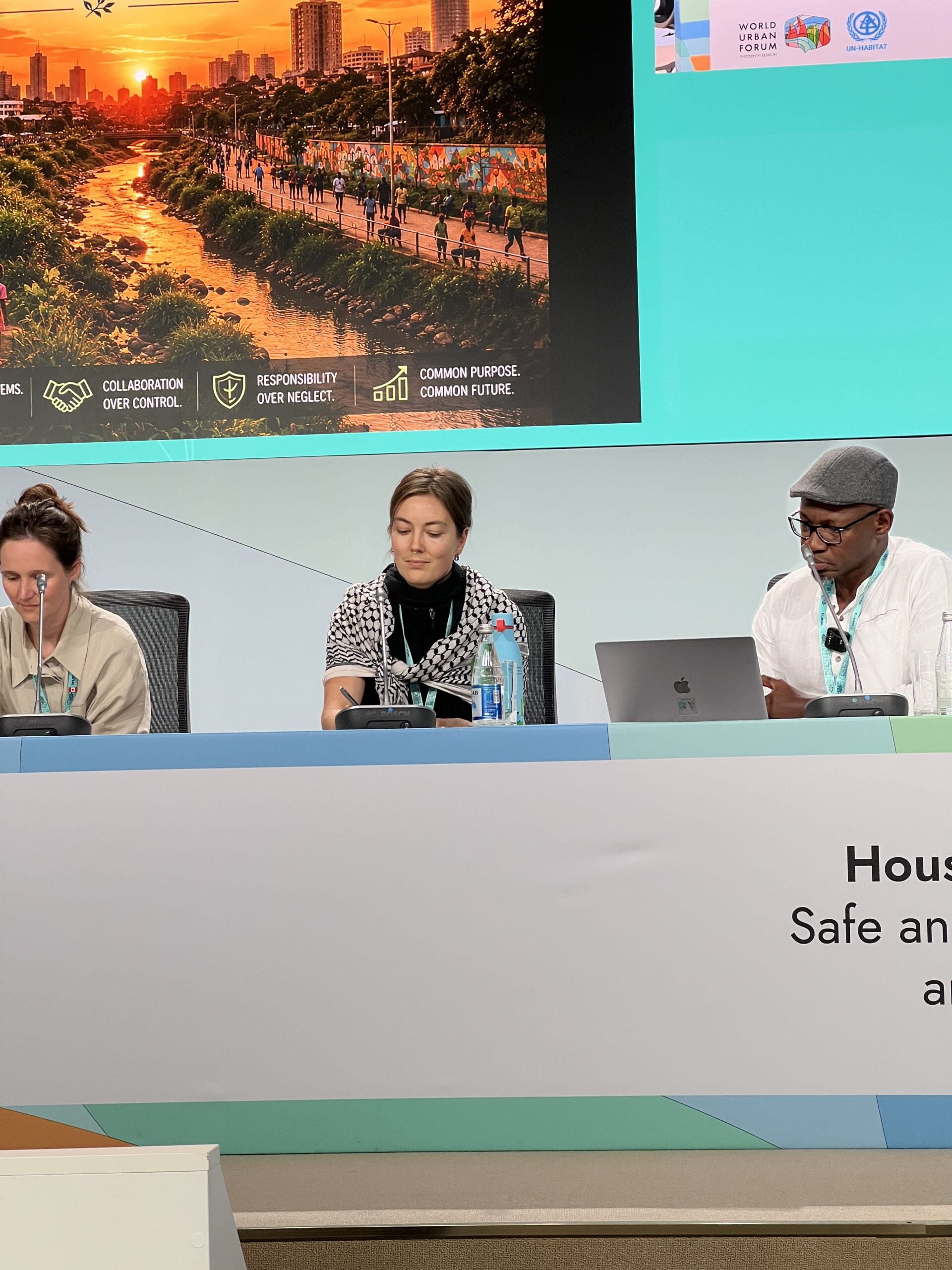
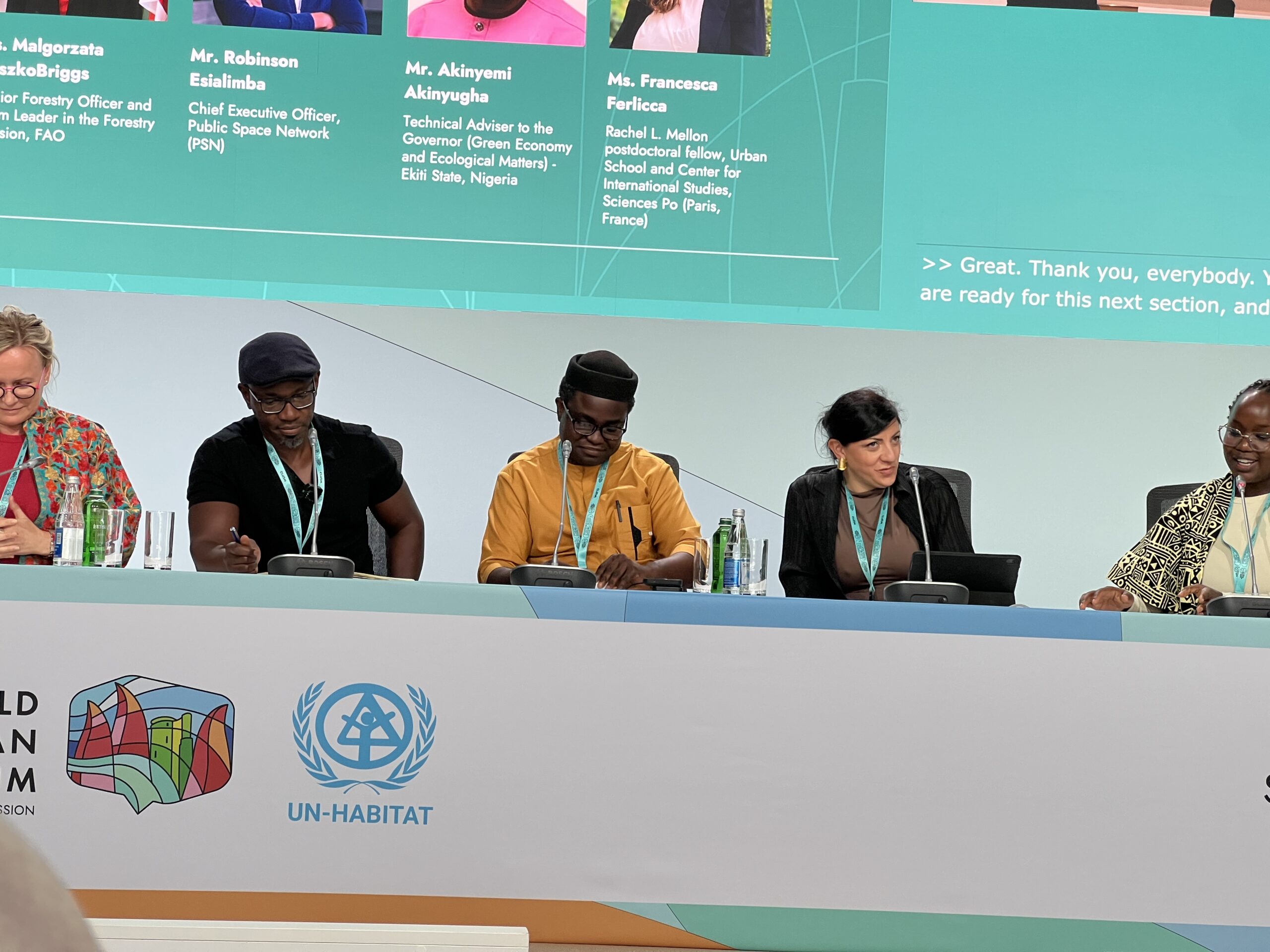
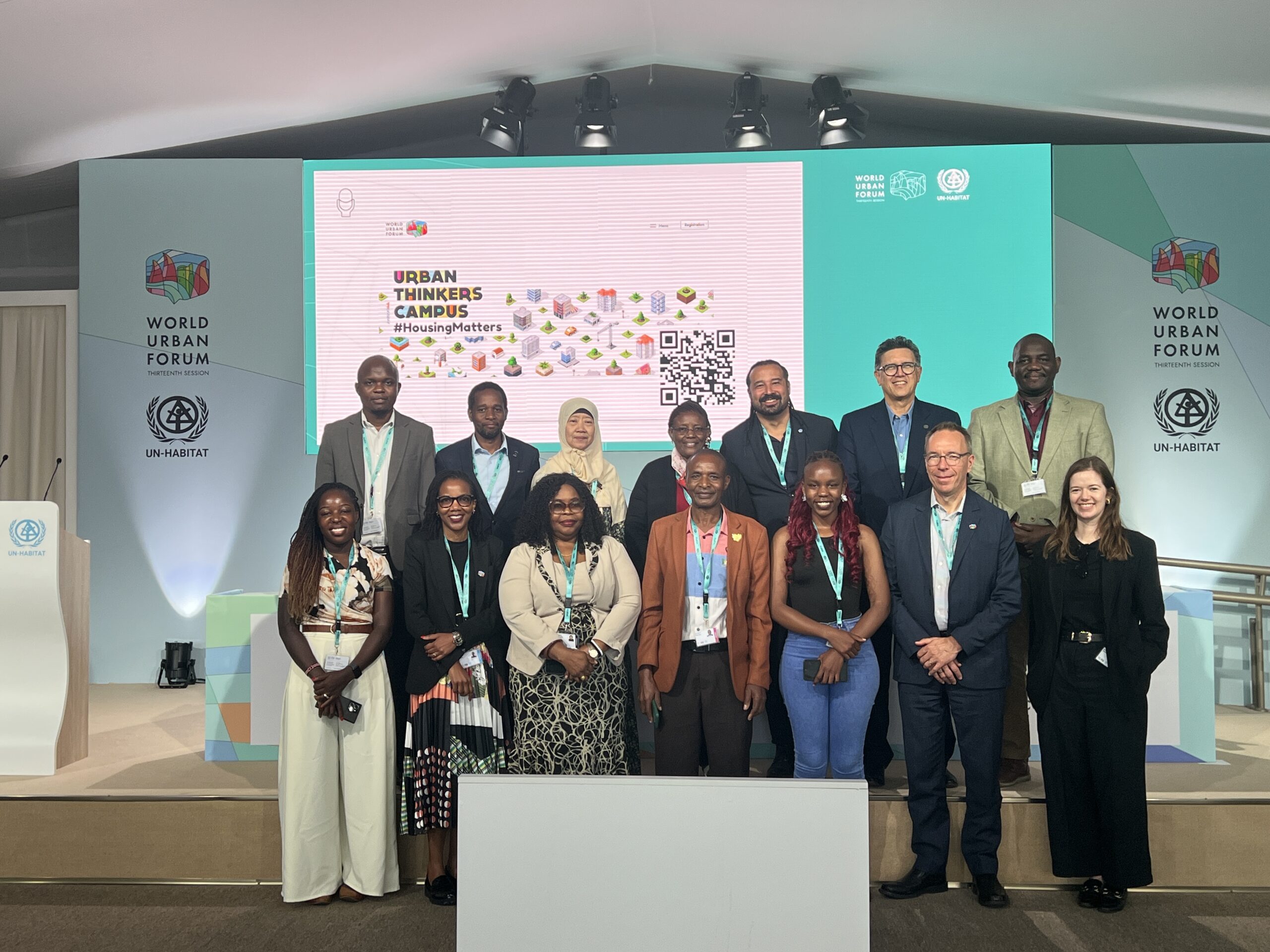


At this year’s World Urban Forum (WUF13) in Baku, Azerbaijan, Public Space Network participated in a UN-Habitat-convened session titled Scaling Green Neighbourhoods Into Resilient Urban Systems.
Moderated by Joy Mutai, the session brought together voices from different urban contexts, including Malgorzata BuszkoBriggs from FAO, Cllr Kenalemang Phukuntsi, Eng. Shaikh Mohammed Ahmed Alkhalifa, Akinyemi Akinyugha, Francesca Ferlicca, Mr. Mthobeli Kolisa, and PSN CEO Robinson Esialimba.
The conversation focused on a question that matters deeply for cities like Nairobi:
How do green neighbourhood interventions move from isolated projects into citywide systems that actually strengthen urban resilience?
Across many fast-growing cities, especially in the Global South, communities are facing flooding, heat stress, land degradation, biodiversity loss and pressure on basic services. In that context, urban forestry and nature-based solutions cannot be treated as decoration or beautification.
They are infrastructure.
Trees, green corridors, vegetated buffers and community-managed green spaces can help manage stormwater, reduce heat, stabilize land, improve air quality and strengthen social cohesion when they are properly embedded into neighbourhood planning.
But the session also made something clear: The challenge is not only knowing that these solutions work. The challenge is scaling them. Many green interventions begin as strong local or grassroots projects. They work in one neighbourhood. They respond to real problems. They are shaped by people who understand the conditions on the ground. But if they remain isolated, their impact stays limited.
To become part of a citywide resilience system, they need governance arrangements, financing mechanisms, institutional support and political will. That is where Robinson Esialimba’s contribution connected strongly to PSN’s work in Nairobi. He spoke to the importance of governance around urban commons, and why communities and government need to work together instead of separately.
Communities bring lived experience.
They know where flooding begins. Which spaces are used. Which areas are unsafe. Which local systems already exist. And what people are likely to maintain after implementation.
Government brings another kind of capacity.
Resources, policy support, infrastructure investment. coordination and the ability to scale what works beyond one neighbourhood. The point is not that one side has all the answers.
It is that resilient cities need both.
Grassroots implementation shows what is possible at community level. But government support helps embed those lessons into larger planning, budgeting and infrastructure systems. That is how a rain garden, tree corridor, community-managed green space, or local flood response can move from being a project into becoming part of how a city plans for resilience.
For Nairobi, this matters.
Because many of the communities most affected by climate risk are also the communities already experimenting with practical responses. The question is whether those responses are recognised, supported, financed and connected to wider urban systems. That is the difference between scattered greening projects and resilient urban transformation. And that is why resilient cities cannot be built from boardrooms alone.
They are built when local knowledge, institutional support, financing and political will come together around the same goal.
Follow PSN to see how community-led public space work, climate resilience and governance lessons are shaping practical approaches for Nairobi:
Instagram: https://www.instagram.com/publicspacenetwork/
TikTok: https://www.tiktok.com/@publicspacenetwork
LinkedIn: https://www.linkedin.com/company/public-space-network/?viewAsMember=true
Facebook: https://www.facebook.com/PublicSpaceNetwork