


One of the biggest mindset shifts happening inside the Cool Waters Academy is realizing that climate adaptation does not always begin with massive infrastructure, huge land or expensive systems.
Sometimes it begins with how communities see the small spaces they already move through every day. During the academy, one trainee reflected that they used to believe building a meaningful public space required “a massive field or a river.” Now, after progressing through the program’s practical learning sessions, that perspective has completely changed.
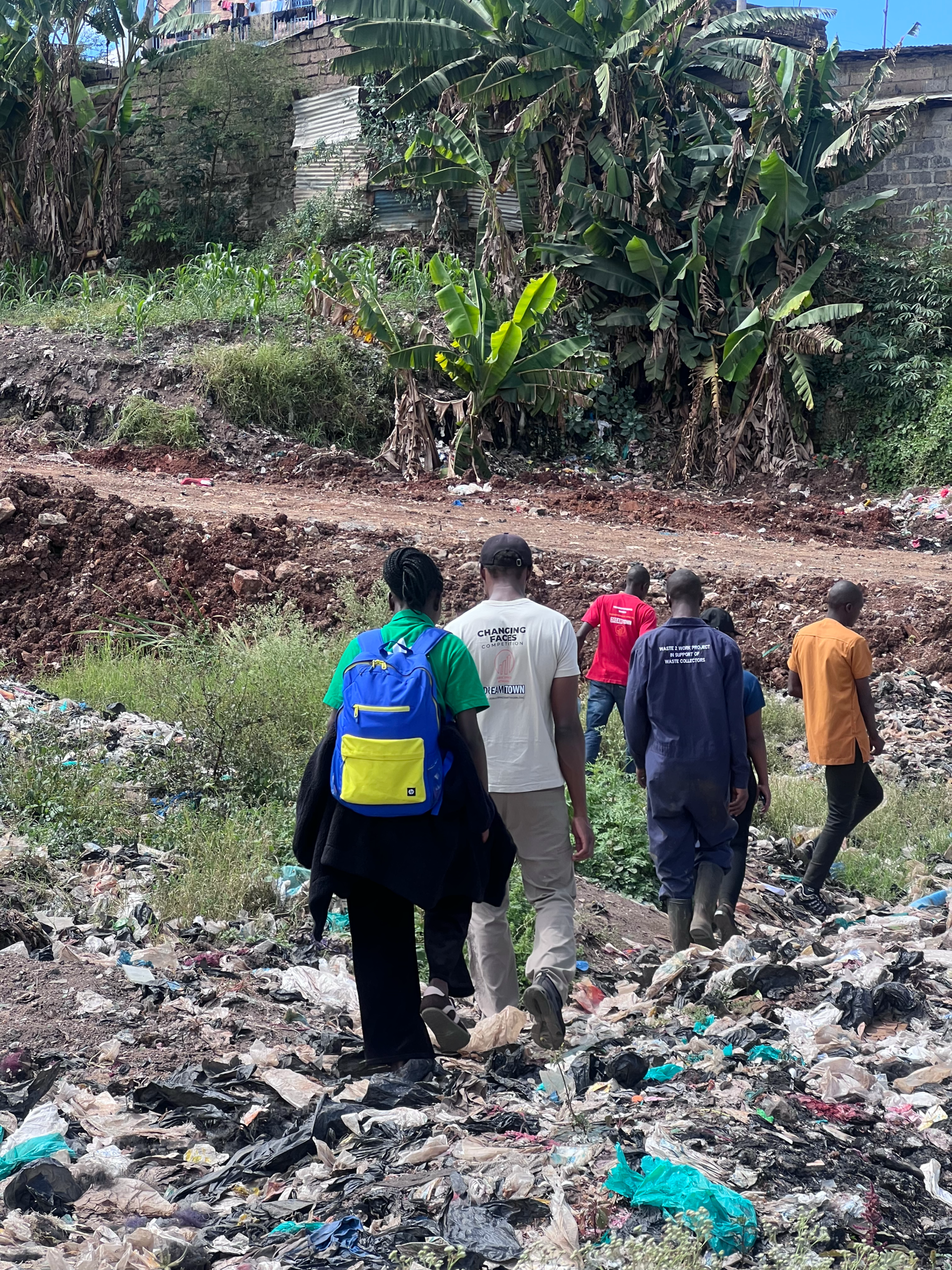
Inside Dandora, participants are exploring how small, overlooked courts and shared spaces between homes can become places that help communities respond to flooding, heat, safety challenges and environmental stress.
And the idea is surprisingly practical.
In many neighborhoods, residents are already organized through Nyumba Kumi structures, where small groups of households coordinate and support each other locally. That existing social structure becomes an advantage.
Instead of waiting for a large external project, communities can organize around the spaces they already share, maintain them collectively and slowly transform neglected areas into productive, safer and more resilient environments.
The academy has now progressed beyond hazard mapping and community risk analysis into Module 3, where participants visit and study real climate adaptation projects across Nairobi to understand how different communities are responding to environmental challenges in practice.
And one important lesson keeps appearing: Climate adaptation becomes more realistic when people stop seeing transformation as something distant, expensive or reserved for experts. Because sometimes the most powerful changes begin with rethinking the spaces communities have been walking past every day.
The Cool Waters Academy is implemented through a partnership between Public Space Network (PSN), Dreamtown, UN-Habitat and Kounkuey Design Initiative (KDI), bringing together community learning, climate adaptation and practical urban resilience approaches.
Follow our work to see how communities across Nairobi are turning local knowledge, shared spaces and practical action into real climate resilience:
Instagram: https://www.instagram.com/publicspacenetwork/
TikTok: https://www.tiktok.com/@publicspacenetwork
LinkedIn: https://www.linkedin.com/company/public-space-network/?viewAsMember=true
Facebook: https://www.facebook.com/PublicSpaceNetwork
Because resilience does not always start with building something bigger. Sometimes it starts with seeing existing spaces differently.