
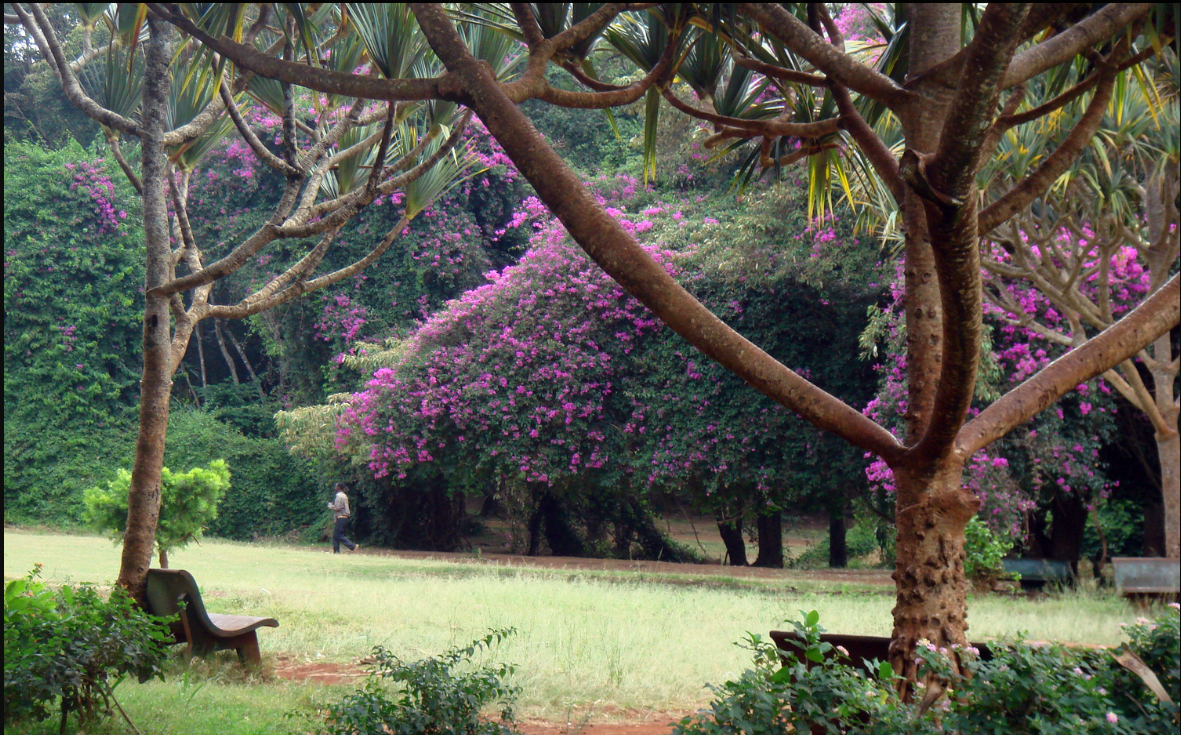


Most people experience Nairobi’s parks as places to pass through, rest, exercise or meet friends. But many of these spaces quietly hold some of the city’s most important stories.
Jeevanjee Gardens, for example, was gifted to Nairobi residents in 1906 by businessman Alibhai Mulla Jeevanjee as a public green space for gathering and rest. Decades later, it survived attempts to be turned into a shopping mall, remaining one of the few truly open public spaces in the CBD.
Uhuru Park carries a different kind of history. Beyond being one of Nairobi’s most recognized parks, it also became a site of resistance and public action. In 1989, Wangari Maathai helped stop plans to construct a 60-storey complex inside the park, turning it into one of Kenya’s most symbolic public spaces.
Karura Forest also carries layers of history that many people rarely think about today. Parts of the forest were originally protected during the colonial era as a fuel source for the Uganda Railway. Years later, its caves became hideouts for Mau Mau freedom fighters during the struggle for independence.
And at Uhuru Gardens, Kenya’s history changed forever. This is where the British colonial flag was lowered and the Kenyan flag raised for the very first time on Independence Day.
These stories reveal something important: Public spaces are not just empty land waiting for development. They are places where cities store memory, identity, resistance, culture and public life.
And even today, these same parks continue supporting everyday Nairobi life in ways many people barely notice. They create space for gathering, movement, reflection, recreation and public access in an increasingly dense city. We continue sharing stories, insights and lessons about the public spaces shaping Nairobi’s past, present and future.
Follow our work to explore how these spaces continue influencing everyday life across the city and why protecting them still matters today:
Instagram: https://www.instagram.com/publicspacenetwork/
TikTok: https://www.tiktok.com/@publicspacenetwork
LinkedIn: https://www.linkedin.com/company/public-space-network/?viewAsMember=true
Facebook: https://www.facebook.com/PublicSpaceNetwork
Because sometimes the most important parts of a city are the spaces that quietly carry its history forward.