


For a long time, cities tried to solve urban problems by overpowering nature.
More concrete, more drainage, more hard infrastructure.nBut as Nairobi experiences heavier rains, hotter temperatures and increasing environmental pressure, something important is becoming clearer: Some of the most effective urban solutions do not come from fighting nature. They come from working with it.
Across different parts of the city, more attention is now being placed on nature-based solutions. Practical environmental systems that help cities absorb pressure instead of constantly reacting to crises after they happen. And many of these solutions are surprisingly simple.
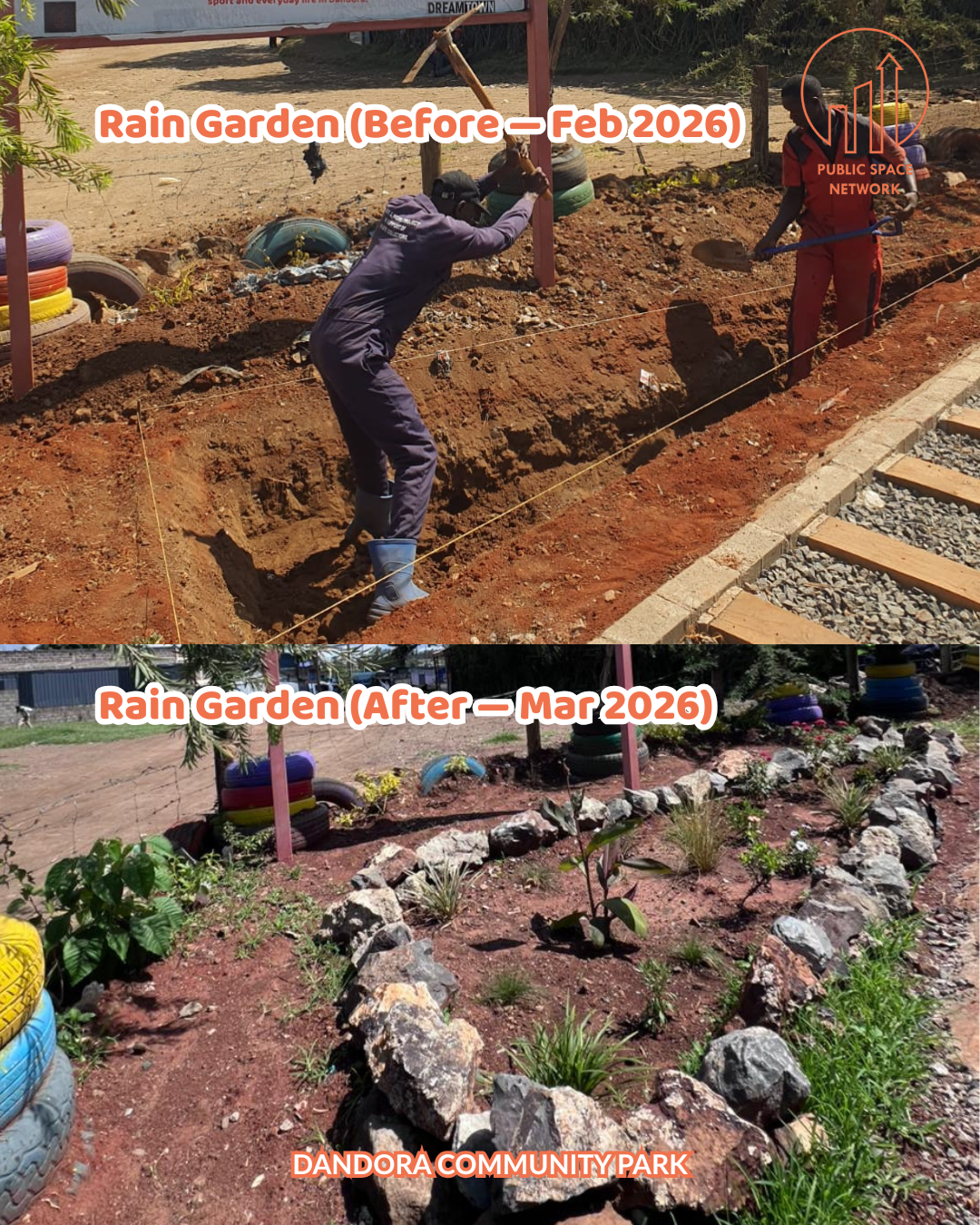
Rain gardens, for example, are designed to absorb stormwater before roads and drainage systems become overwhelmed. Instead of rainwater rushing directly into flood-prone streets, the soil and vegetation help slow it down naturally. That matters more than most people realize. Because flooding is not only an infrastructure problem. It also affects public health, transport, business activity and the cost of maintaining the city itself.
Other solutions focus on heat.
In dense urban environments, surfaces like concrete and asphalt trap heat throughout the day, creating what urban planners call “heat islands.” But smaller green spaces, tree canopies and even micro-forests help lower surrounding temperatures and make neighbourhoods more livable during extreme heat.
And the impact is not only environmental.
Research has shown that greener urban environments can also reduce mental fatigue, improve concentration and lower stress levels in densely populated areas. Some solutions focus on land stability and water quality. Deep-rooted vegetation like vetiver grass helps prevent erosion along riverbanks and slopes. Bamboo buffers help filter pollutants before they reach rivers. Permeable walkways allow rainwater to pass into the ground instead of collecting on roads and footpaths. Others support economic resilience too. Urban farming methods like sack farming and composting create opportunities for local food production in limited spaces while reducing waste and lowering pressure on household costs.
What makes these approaches important is that they are not isolated environmental projects. They are systems. Systems that influence flooding, heat, public health, food access, walkability, water quality and everyday quality of life.
This changes how we think about infrastructure. Because not all infrastructure looks like highways, pipes or large buildings. Sometimes it looks like trees, wetlands, soil, grass and open green space. And in many cases, those systems are cheaper to maintain, more adaptable over time and more effective at reducing pressure before problems escalate.
That is why nature-based solutions matter.
Not because they are trendy. But because cities that learn to work with natural systems become more resilient, more affordable and better prepared for the future. We continue sharing how public spaces, environmental systems and community-led approaches are shaping a more resilient Nairobi.
Follow our work to see how these ideas are being applied across the city and what it takes to turn them into real, functioning urban systems:
Instagram: https://www.instagram.com/publicspacenetwork/
TikTok: https://www.tiktok.com/@publicspacenetwork
LinkedIn: https://www.linkedin.com/company/public-space-network/?viewAsMember=true
Facebook: https://www.facebook.com/PublicSpaceNetwork
Because sometimes the smartest urban infrastructure… already exists in nature.