
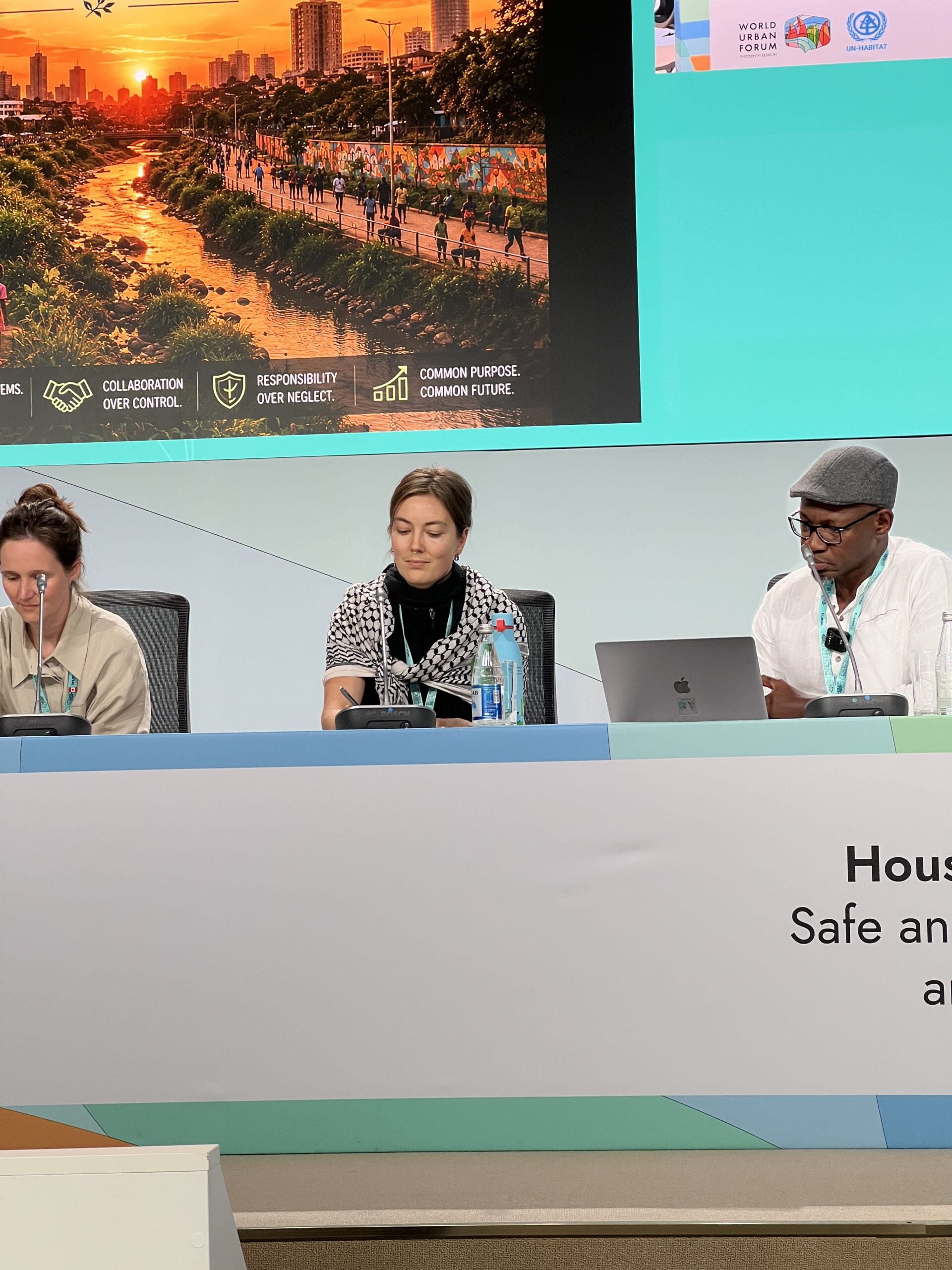
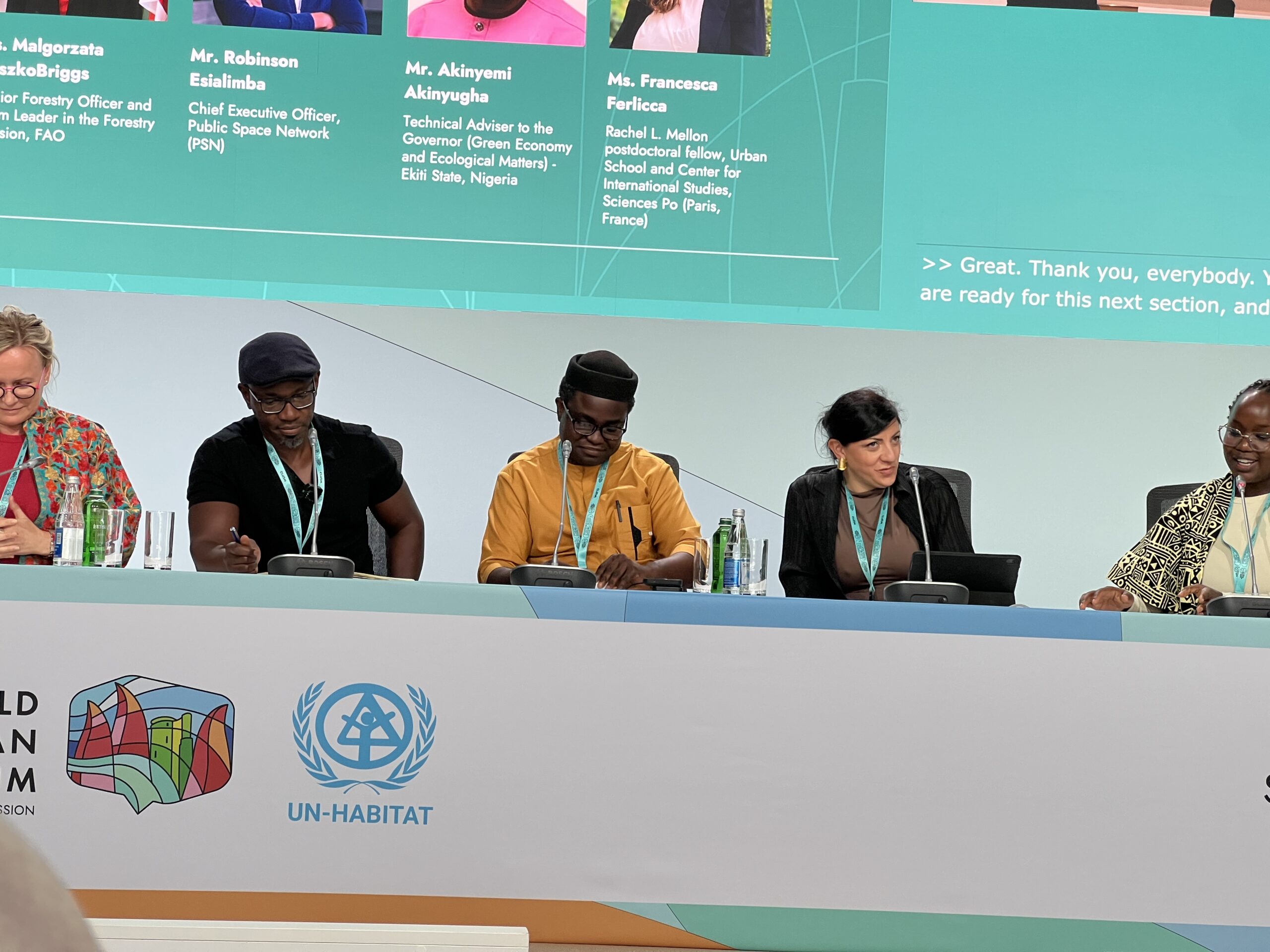
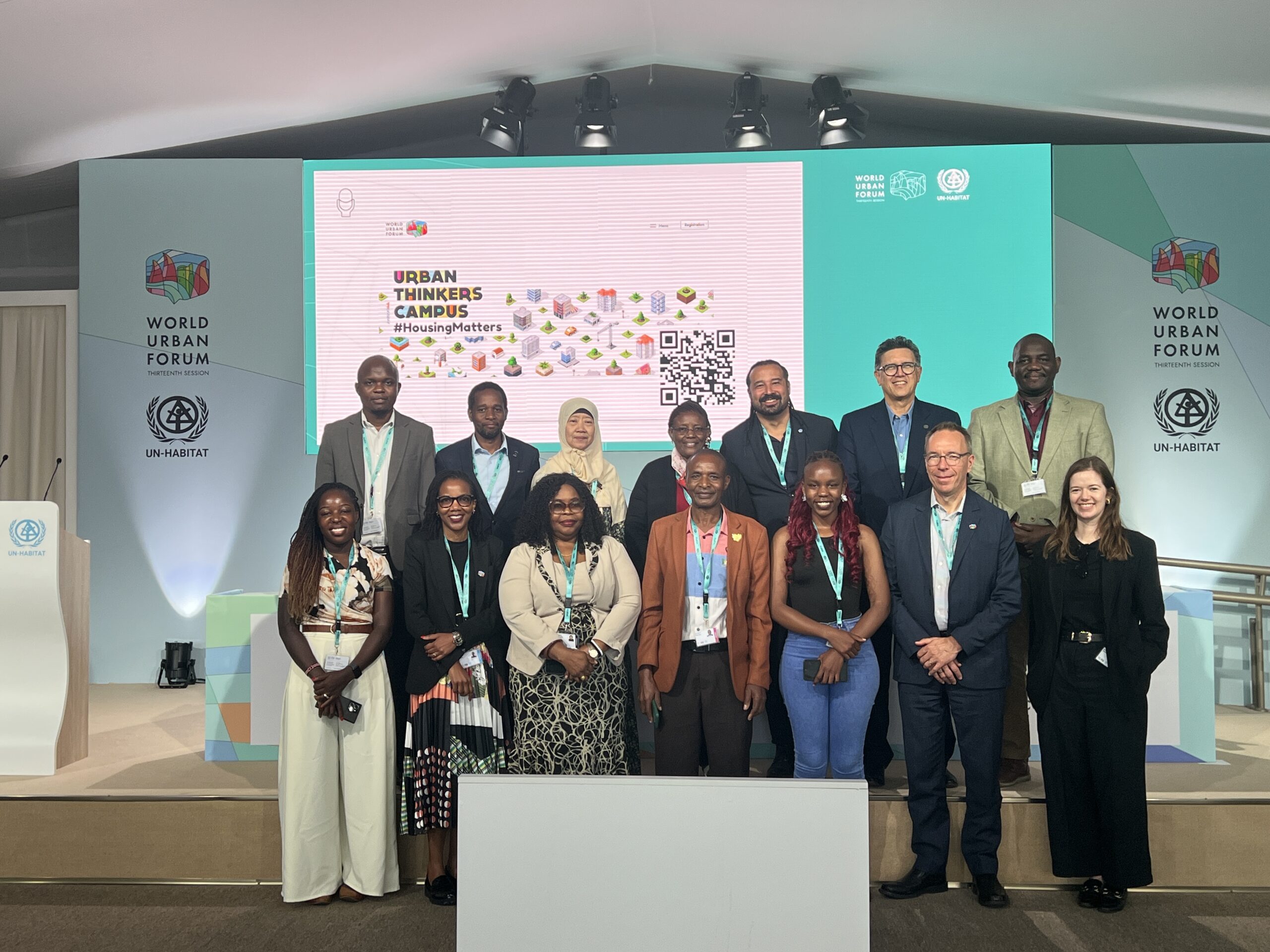


This May, Public Space Network attended the World Urban Forum (WUF13) in Baku, Azerbaijan, one of the world’s largest global gatherings focused on cities, climate resilience, public spaces and urban development. But beyond the panel discussions and conference halls, some of the most important lessons came from simply moving through the city itself.
Because very quickly, one thing became obvious: Baku feels intentionally designed for people. You notice it in the movement, the walkability, the cleanliness, the safety, the public spaces and the small systems that quietly make everyday urban life feel easier. At the forum itself, thousands of participants from around the world were constantly moving between venues, hotels, side events and networking spaces. Yet despite the scale of the event, the experience felt surprisingly coordinated.
Volunteers were visible almost everywhere helping people navigate the venue and transport systems. Shuttle services were organized clearly. Directional support was easy to follow. Even with so many people moving at the same time, the city and the forum felt prepared for it. And while that may sound like a small detail, it actually says something much bigger about urban governance.
Good cities communicate through organization. Ironically, one of our strongest observations came from a mistake. On one afternoon after the forum, we accidentally boarded the wrong shuttle after receiving incorrect directions from a volunteer. Instead of taking us toward our hotel area, the shuttle dropped us in a completely different part of the city. What followed was an almost 30-minute walk back.
At first, it felt frustrating. But somewhere during that walk, the frustration slowly turned into reflection. Because the city still felt walkable. The pedestrian systems still worked. Movement still felt manageable even outside the areas we had originally planned to pass through. Separately from that experience, one thing we consistently noticed throughout the week was how active the city remained even late into the evening. Public spaces were still occupied, restaurants and gathering areas remained lively and pedestrian activity was still visible late at night, especially around the Nizami Street area. Throughout the week, we also visited several public spaces across the city, including Baku Boulevard, Highland Park, Philharmonic Garden and the pedestrian-oriented Nizami Street area.
During discussions on resilient urban systems and community-led climate adaptation, PSN emphasized the importance of governance, not simply as management, but as participation. Because governance is not only about who controls a space. It is also about who has access to it, who shapes it, who maintains it, who benefits from it and whether communities are treated as active partners rather than passive recipients. One of the strongest global themes we noticed throughout WUF13 was a growing recognition that resilient cities cannot be built through top-down systems alone. Communities bring lived experience, trust, local knowledge and long-term stewardship, while governments bring coordination capacity, infrastructure investment and large-scale implementation power.
The future of better cities likely depends on those two forces learning to work together more intentionally. And perhaps that is what stayed with us most after leaving Baku. Not simply that the city looked beautiful. But that many aspects of the city appeared organized around making urban life function better for people. That lesson matters for Nairobi too. Because improving cities is not only about building larger infrastructure. Sometimes, it begins with designing systems that make people feel considered. Follow PSN to explore what makes cities easier, safer and more functional for everyday life, and what Nairobi can learn from urban systems around the world.
Instagram: https://www.instagram.com/publicspacenetwork/
TikTok: https://www.tiktok.com/@publicspacenetwork
LinkedIn: https://www.linkedin.com/company/public-space-network/?viewAsMember=true
Facebook: https://www.facebook.com/PublicSpaceNetwork