


For most families, taking a child to school is routine.
A short walk.
A quick bus ride.
A familiar path through the neighbourhood.
But in some parts of Nairobi, that journey can become far more dangerous when the rains come.
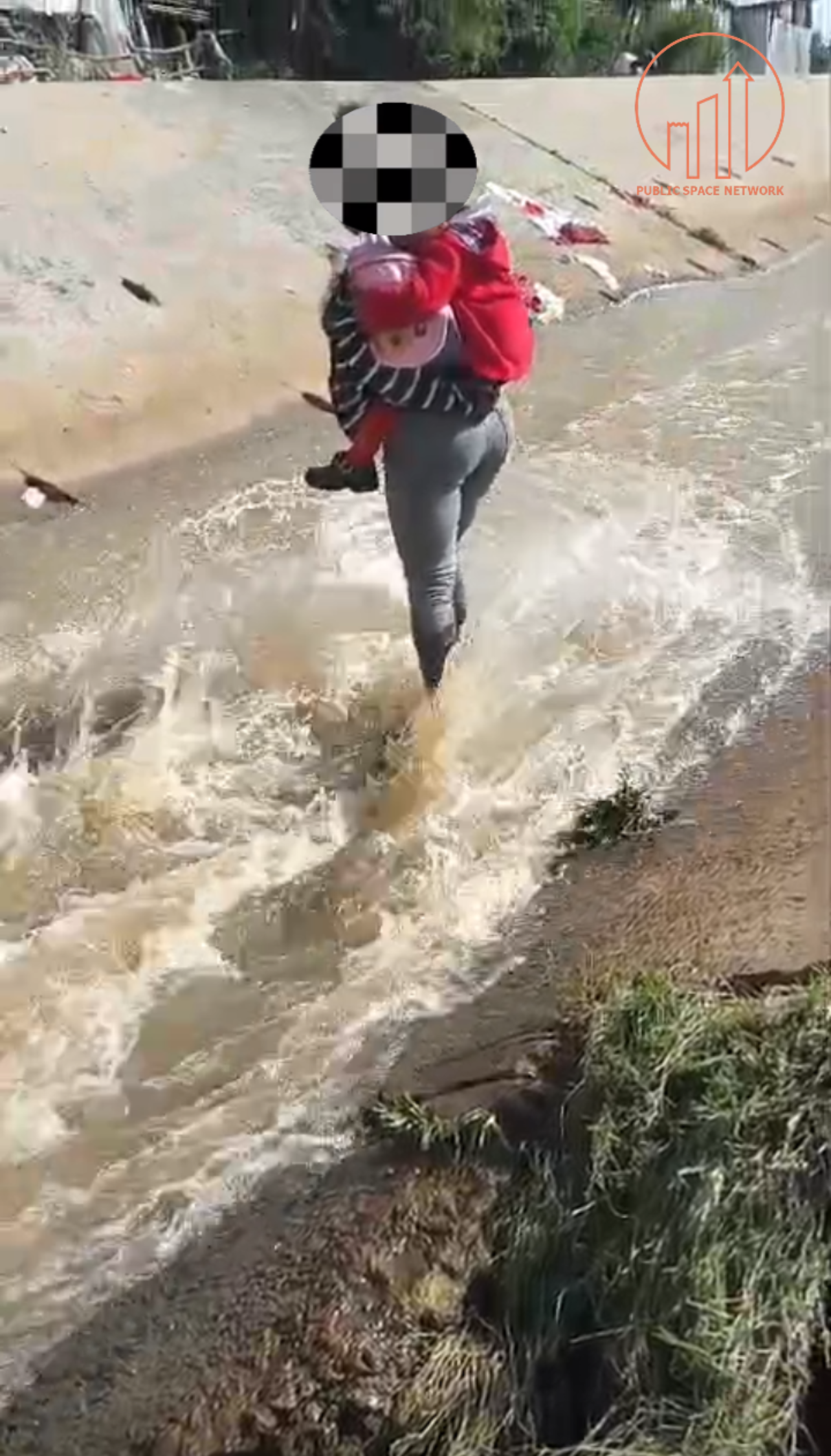
In footage recorded during recent flooding, a mother carries her child across a flowing river just to reach the other side, where the school is located.
The moment was captured by a youth coordinator along the Ngong River corridor.
The mother pauses first. Looking for the safest place to cross. Watching the speed of the water. Then she lifts the child onto her back and steps into the river.
Carefully. Slowly. One step at a time.
It is not the kind of journey any parent should have to make just to reach a classroom. Yet families in this community face the same situation. There is no bridge connecting the two sides. So residents are left to navigate the water themselves.
Recently, a child was swept away by the floods in this same area.
Moments like this remind us that infrastructure is not only about convenience. Sometimes it determines whether people can move safely through their own neighbourhood. Sometimes it determines whether children can reach school without being placed in danger.
Flooding often exposes gaps that already exist in urban infrastructure.
Missing bridges.
Unsafe crossings.
Routes that become inaccessible the moment water levels rise.
These are not unusual challenges in growing cities. But they are challenges that deserve attention if urban development is to serve the people who rely on it every day. Because access to school should never depend on whether a parent can safely carry a child across a river.
We are sharing this moment to highlight a reality that many Nairobi residents continue to face during heavy rains.
If you would like to watch the full video documenting this crossing, you can view it on our social media channels:
TikTok: [ https://www.tiktok.com/@publicspacenetwork/video/7615963862747139346 ]
Because when basic infrastructure is missing, everyday journeys can quietly become dangerous… and cities only become truly resilient when those risks are designed out of daily life.