


At first glance, it doesn’t make sense. Prime land in the middle of a growing city is one of the most valuable assets anyone can own. So why would someone give it away?
In the early 1900s, businessman Alibhai Mulla Jeevanjee did exactly that. He gifted what is now Jeevanjee Gardens to the people of Nairobi. Not as a random act of generosity, but as something more deliberate. Because even then, there was an understanding that cities don’t function on buildings alone. They rely on what happens in between them.
Movement. Interaction. Exchange.
And those things need space. A clean, accessible place in the middle of the city does something that individual buildings cannot. It draws people in. It gives them somewhere to stop. And once people stop, something else begins to happen.
They talk, meet, exchange ideas, conduct small transactions and spend time.
Over time, that creates value. Not in a single, obvious way, but across many small, consistent interactions. This is what makes public space different. It doesn’t generate value through one function. It creates the conditions for many things to happen at once.
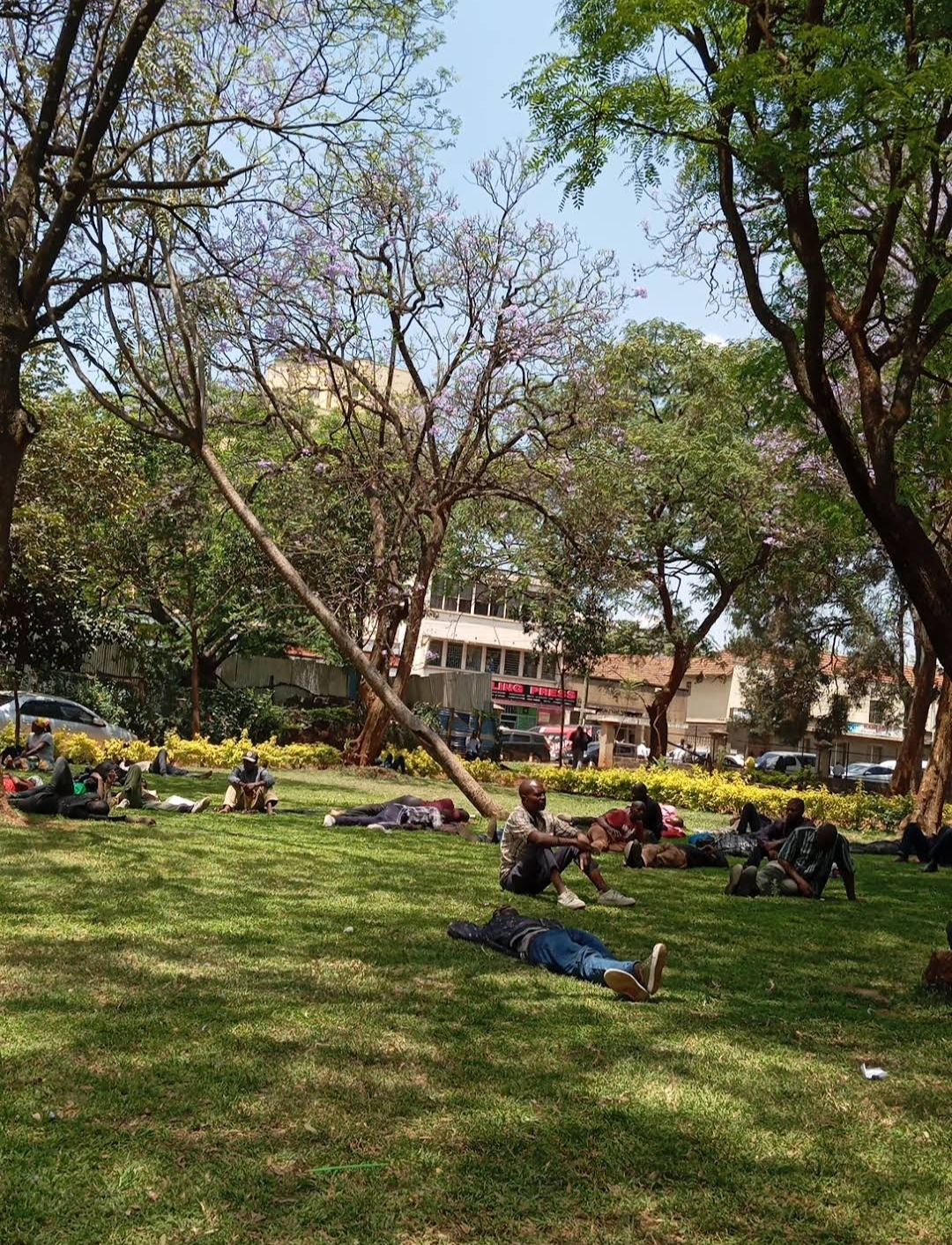
In a place like Jeevanjee Gardens, that still shows today. People rest between errands, freelancers sit and work, informal meetings happen and small vendors operate around the flow of people. It becomes part of how the city works. Not just how it looks. And that is where the original decision starts to make more sense. Because giving away land did not remove its value… it redistributed it. Instead of being locked into a single use, the space continues to generate value through everyday activity.
For the people who use it, for the businesses around it and for the city itself. This is something many cities are still learning. Public spaces are not leftovers. They are not decorative, they are part of the system that allows economic and social life to function. And when they are clean, accessible and well-positioned, they do more than serve the public… they support the flow of the city.
This is why public space still matters today. Not just as something to protect, but as something to design intentionally. Because the question is no longer just:
“Why would someone give land away?”
It is:
“What happens when a space is designed to keep giving value over time?”
We continue sharing how public spaces across Nairobi are being shaped to support movement, interaction and everyday economic life in practical ways. Follow our work to see how these ideas are being applied in today’s city:
Instagram ( https://www.instagram.com/publicspacenetwork/ )
TikTok: ( https://www.tiktok.com/@publicspacenetwork )
LinkedIn ( https://www.linkedin.com/company/public-space-network/?viewAsMember=true )
Facebook ( https://www.facebook.com/PublicSpaceNetwork )
Because some of the most valuable spaces in a city are the ones everyone can use.