


When people think about making money in Nairobi, they rarely think about public space.
They think about jobs.
Businesses.
Investments.
But not the spaces people move through every day. And yet, those spaces already hold something valuable.
Attention.
Movement.
Time.
Every day, thousands of people pass through the same places. At predictable hours. In familiar patterns. Along routes that repeat themselves day after day. And that kind of consistency creates opportunity. Not just for activity. But for income.
In many cities, public spaces are quietly becoming part of economic systems in ways most people don’t immediately notice. For one, the same spaces people move through can support digital infrastructure.
Wi-Fi points.
Connectivity hubs.
Small systems that depend on being close to where people already are.
Because where people gather, digital demand gathers too. And that has value. Not only for service providers, but for understanding how people move, where they spend time, and where new opportunities are most likely to work. There is another layer too.
As online shopping grows, one of the hardest parts is not selling products. It is getting them to people quickly and conveniently. That final step of delivery is often where the problem is. And public spaces can help solve that.
They are already accessible.
Already distributed across the city.
Already part of people’s daily movement.
With the right design, they can support pickup points, locker systems and other forms of local delivery access without needing entirely new spaces to be built from scratch.
Then there is visibility. But not only in the old sense of billboards or signs. Public spaces can create opportunities for people to interact with products and services directly.
To test something.
To experience it.
To engage with it in real time.
That is more valuable than simply being seen. It turns attention into interaction. And interaction is often where real commercial value begins. All of this points to something many people overlook.
Public spaces are not just social infrastructure. They are economic platforms too.
They create the conditions for:
Visibility.
Access.
Movement.
Interaction.
And those conditions are what make economic activity possible. Not through isolated programs. But through how the space functions every day. This is why design matters.
How people move through a space.
Where they stop.
How long they stay.
These are not just design decisions. They are economic ones. Across Nairobi, this potential already exists. But with more intentional planning, it can become more structured.
More reliable.
More visible.
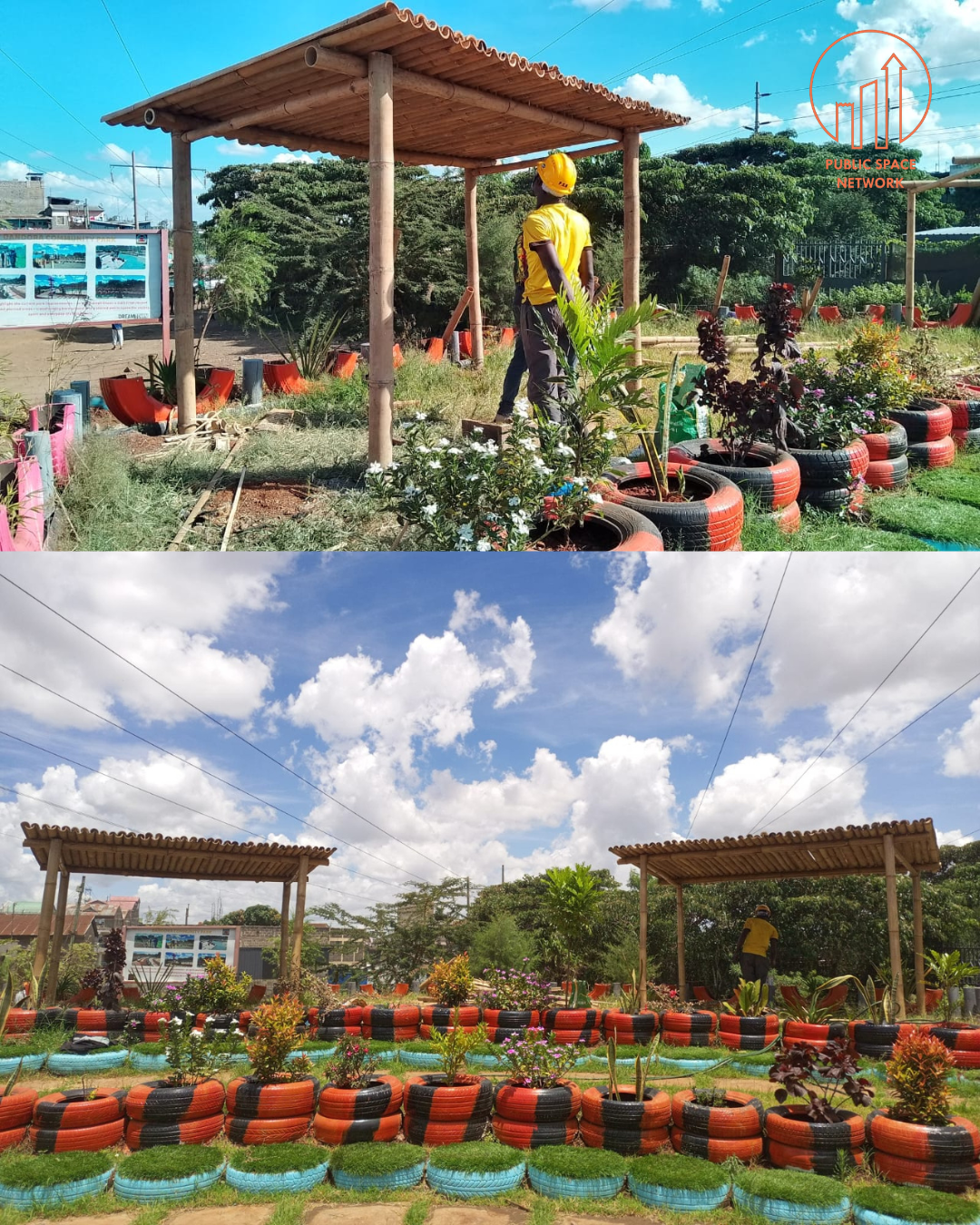
Because when public spaces are designed to function well, income opportunities do not need to be forced into them. They emerge from them.
We continue sharing how public spaces across Nairobi can support not only movement and social life, but also practical opportunities for income, exchange and everyday economic participation.
Follow our work to see how these ideas can take shape in different public spaces across the city:
Instagram (https://www.instagram.com/publicspacenetwork/)
TikTok: ( https://www.tiktok.com/@publicspacenetwork )
LinkedIn ( https://www.linkedin.com/company/public-space-network/?viewAsMember=true )
Facebook ( https://www.facebook.com/PublicSpaceNetwork )
Because when public spaces work well, they do more than bring people together.
They create conditions that people can build livelihoods around.