
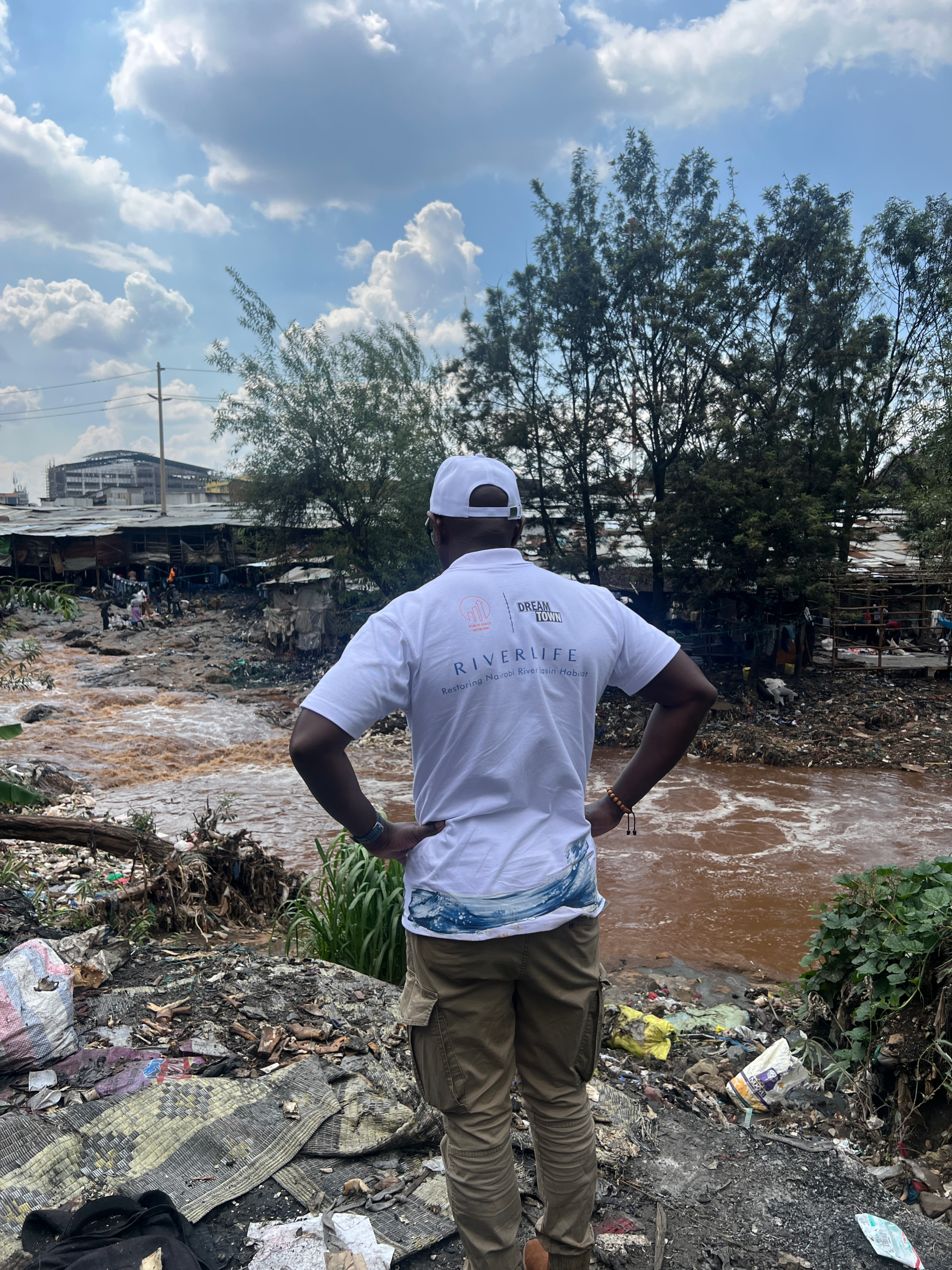


When people think about flooding in Nairobi, they usually think about damaged roads, traffic or overflowing rivers. But flooding creates another problem that is often less visible.
Public health risk.
In many parts of the city, heavy rainfall does not only overwhelm roads and drainage systems. It also spreads contaminated water through neighbourhoods, increasing exposure to diseases like cholera and other waterborne illnesses. And the problem is not always the rain itself. It is what happens when the city cannot absorb or redirect that water properly. When surfaces are heavily built up with concrete and very little open ground, rainwater moves faster. Drainage systems fill more quickly. Floodwater collects in places where people live, walk and work. And once sanitation systems overflow, the health risks increase rapidly.
This is where public spaces become more important than most people realise.
Green public spaces are not just recreational areas. They are part of the city’s protective infrastructure.
Trees, soil, vegetation and open ground help absorb and slow down rainwater before it overwhelms drainage systems. That reduces surface flooding, lowers pressure on sanitation systems and helps reduce the spread of contaminated water after heavy rains. In other words, these spaces help reduce risk before emergencies happen. And this matters even more in rapidly growing cities like Nairobi, where extreme weather events are becoming more common and urban pressure continues to increase.
What makes this important is that it changes how we think about public spaces. They are not simply places to visit when the weather is good. They are systems that help cities remain healthier, safer and more resilient over time. Because when green infrastructure is missing, the cost is not only environmental. It becomes social, economic and public health-related.
This is why the design and protection of public spaces matters beyond aesthetics. It affects how well a city can handle pressure. And how well communities are protected when that pressure comes.
We continue sharing how public spaces across Nairobi support climate resilience, public health and everyday urban life in ways that are often overlooked.
Follow our work to see how these systems function, and what it takes to build cities that are healthier and more resilient over time:
Instagram: https://www.instagram.com/publicspacenetwork/
TikTok: https://www.tiktok.com/@publicspacenetwork
LinkedIn: https://www.linkedin.com/company/public-space-network/?viewAsMember=true
Facebook: https://www.facebook.com/PublicSpaceNetwork
Because sometimes the infrastructure that protects public health… does not look like infrastructure at all.