
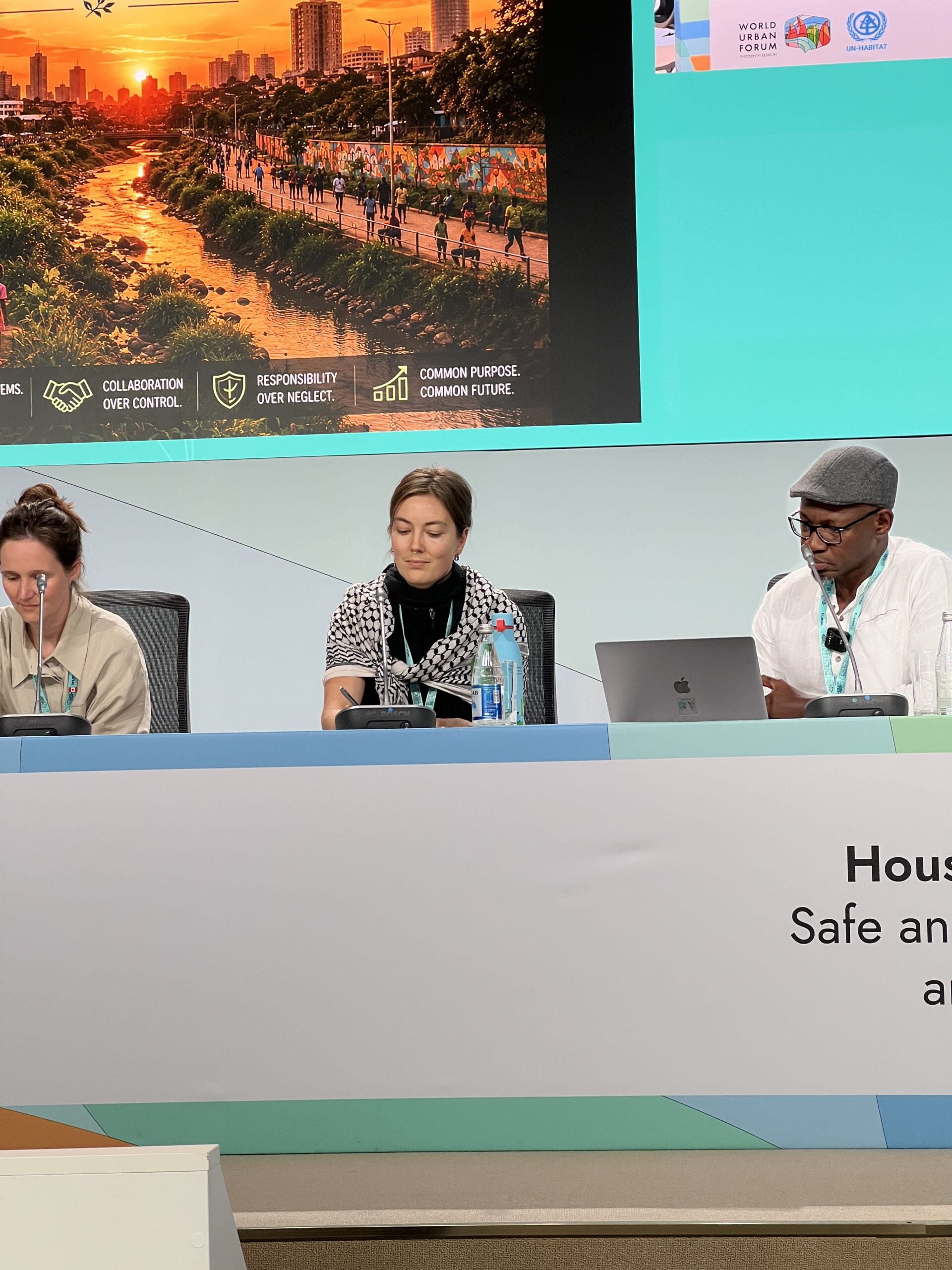
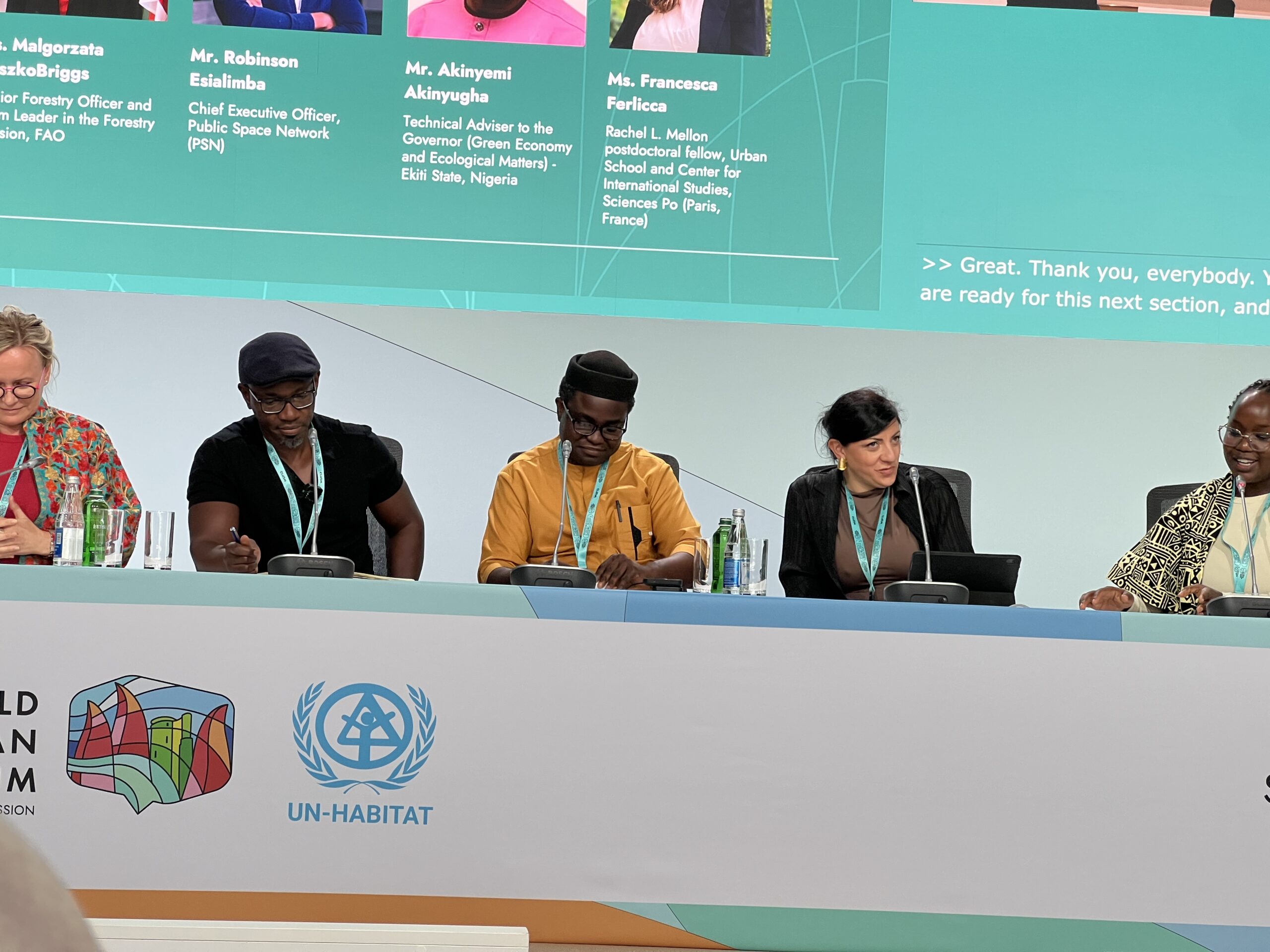
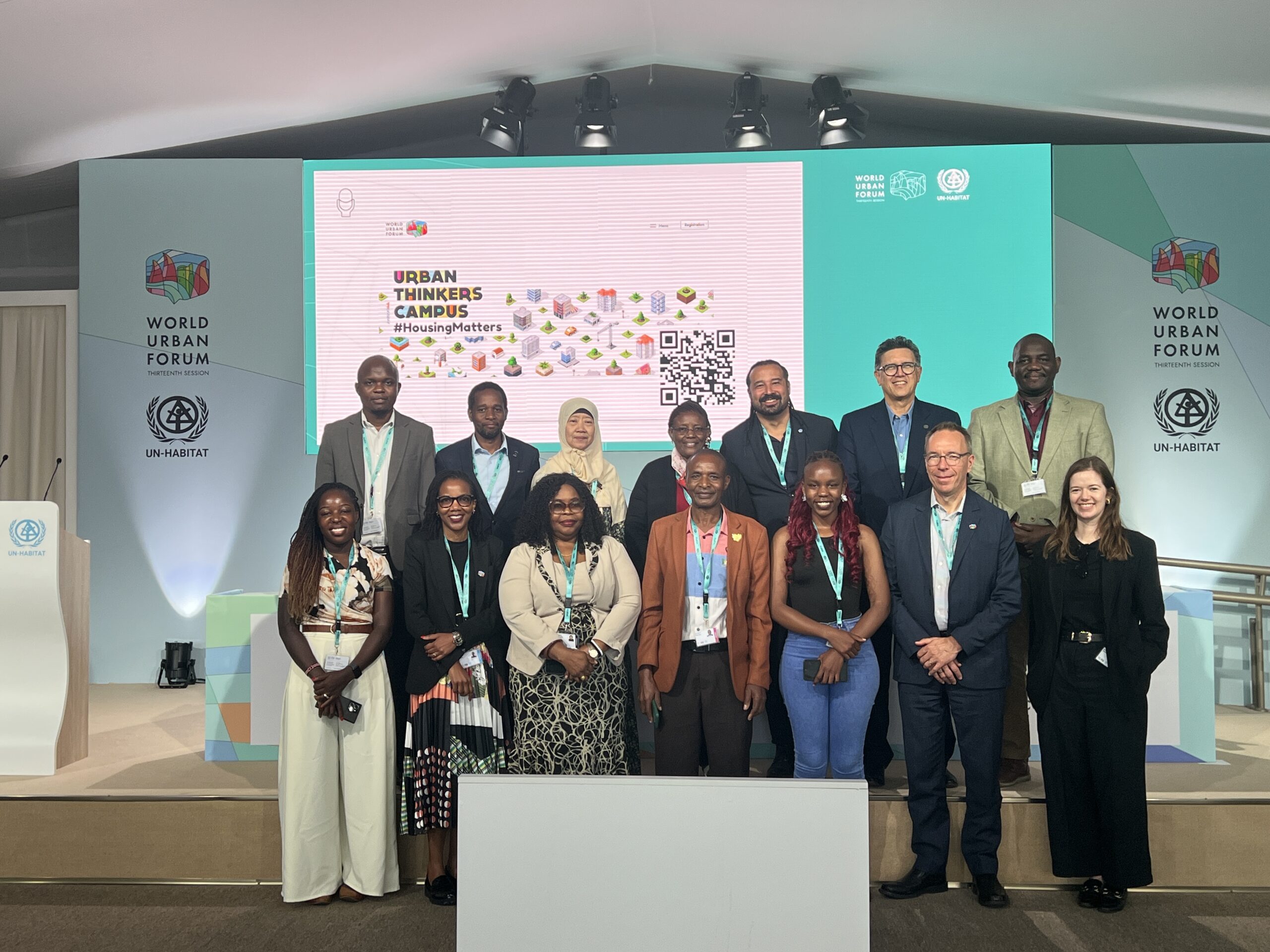


At this year’s World Urban Forum (WUF13) in Baku, Azerbaijan, Public Space Network participated in a networking session titled Living With Rivers, organized by Dreamtown and moderated by Stine Kronsted, Urban Design Lead.
The session brought together practitioners and urban actors working across climate resilience, river restoration, public space and settlement upgrading, including Solomon Karani from UN-Habitat, Dr. Margarita Garfias Royo from the UCL Engineering for International Development (EFID) Centre at The Bartlett, Sabrina Ohler from Kounkuey Design Initiative (KDI), and PSN CEO Robinson Esialimba. One of the strongest themes throughout the discussion was the growing realization that rivers cannot continue being treated as leftover urban spaces. And Nairobi is already deeply familiar with what happens when they are.
Over time, many sections of the Nairobi River have gradually become associated with dumping, pollution, flooding pressure, inaccessible edges and disconnected public life. In some areas, rivers are treated more like drainage channels than living environmental systems connected to the wider city. But eventually, the impacts spread beyond the river itself. Flooding becomes more severe. Drainage systems become overwhelmed. Water quality declines. Public health risks increase. Mobility becomes disrupted. And vulnerable communities absorb the greatest pressure. That is partly why conversations around rivers are changing globally.
The question is no longer only: How do we control water? It is increasingly becoming: How do cities coexist with water more intelligently? During the session, panelists discussed how river systems intersect with climate adaptation, governance, settlement planning, ecology, infrastructure and public life all at once. Because rivers are not isolated environmental features sitting outside the city. They influence how cities function. One of the important ideas raised during the discussion was that resilience does not only come from large engineered responses. Sometimes it also comes from restoring natural systems that cities have spent decades trying to suppress or build around.
Floodplains absorb pressure. Vegetation slows runoff. Permeable landscapes reduce flooding intensity. Healthy river corridors improve ecological balance and public health conditions. And when these systems are integrated properly into urban planning, they become part of a city’s resilience infrastructure. Robinson Esialimba contributed perspectives grounded in Nairobi’s realities, particularly around governance and long-term stewardship within river restoration efforts. Because restoring rivers is not simply about cleaning waterways once. It is about creating systems that continue functioning over time.
Who protects river corridors? Who prevents future dumping? Who maintains restored public spaces? Who coordinates between communities and institutions? And how do cities prevent restored rivers from slowly returning to the same conditions they were in before? Those questions matter because river restoration is rarely successful when treated as a short-term activity. It requires continuity. And continuity depends on governance, participation, institutional coordination and public ownership over time.
Another important point throughout the session was that rivers are deeply connected to public life, even when cities stop recognizing that connection. River corridors influence public health, microclimates, mobility, biodiversity, public space quality, flood resilience and environmental safety. When those systems deteriorate, the effects are rarely isolated to the river alone.
For Nairobi, this conversation felt especially relevant. Because climate pressure is increasing. Flooding events are becoming more disruptive. And the city is being forced to rethink how environmental systems fit into urban futures. Perhaps that is one of the biggest lessons from conversations like these. Cities that continuously fight against natural systems often spend more time reacting to crises. But cities that begin designing with those systems create stronger foundations for resilience, public health and everyday urban life.
Follow PSN to explore how climate resilience, public spaces, governance and river systems are shaping conversations about Nairobi’s future:
Instagram: https://www.instagram.com/publicspacenetwork/
TikTok: https://www.tiktok.com/@publicspacenetwork
LinkedIn: https://www.linkedin.com/company/public-space-network/?viewAsMember=true
Facebook: https://www.facebook.com/PublicSpaceNetwork