


It’s easy to think of public spaces as optional.
Places for leisure, relaxation or passing time. But if they disappeared, the impact would go far beyond that.
The first thing that would begin to change is something you can’t see directly.
How people think.
In a city like Nairobi, your brain is constantly filtering noise, movement and distractions. Traffic, conversations, crowds, decisions. All of it requires attention. And that kind of attention is not unlimited.
Over time, it wears down.
It becomes harder to focus, harder to make decisions and easier to feel overwhelmed.
Public spaces interrupt that cycle.
They give your brain moments where it doesn’t have to filter as much. Where attention can rest instead of constantly working. Without those breaks, mental fatigue would not just increase, it would become the norm. And that affects how people learn, work and function every day.
The second shift would be physical.
Not in a dramatic way at first, but in how the city feels to move through.
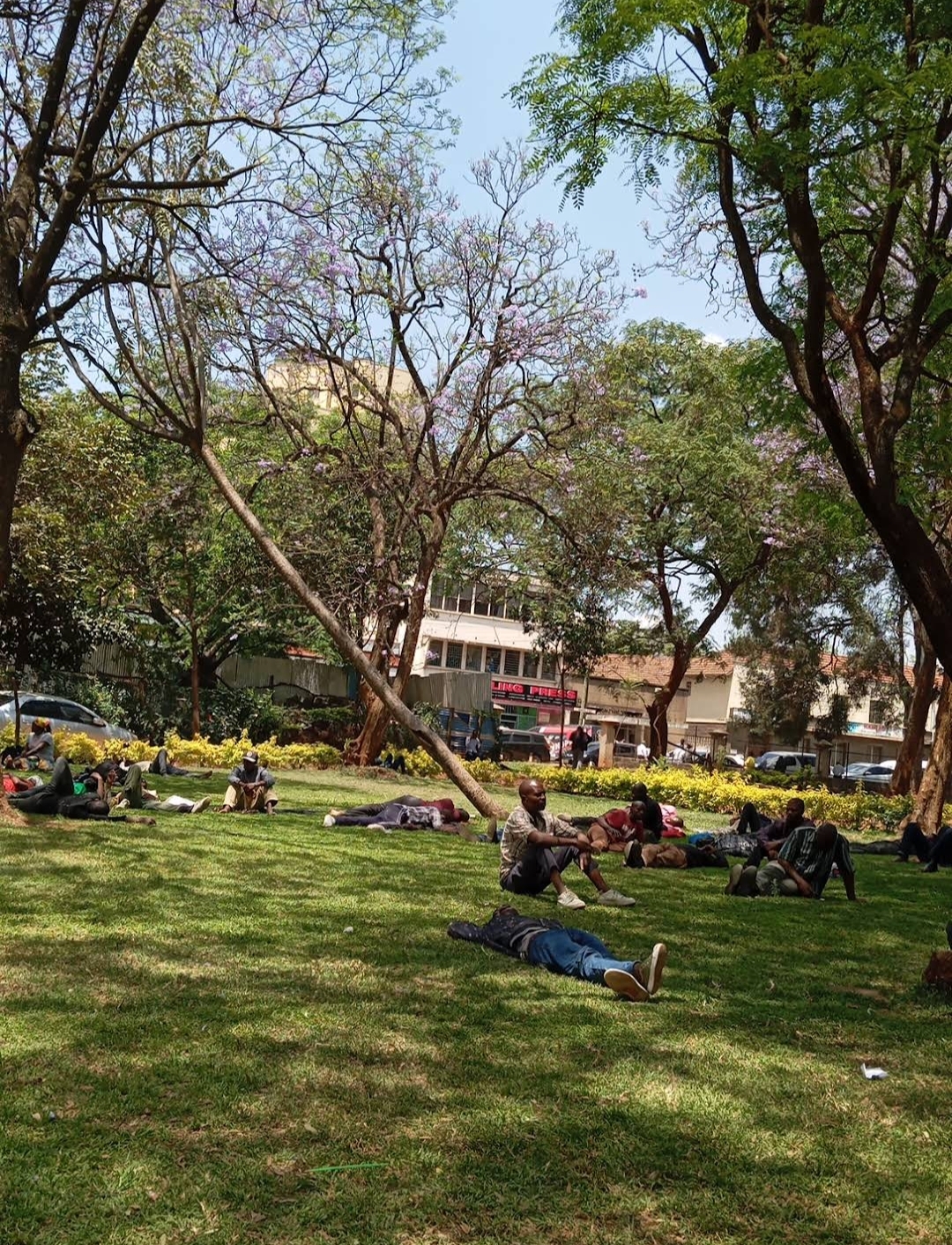
On a hot afternoon, there is a noticeable difference between walking along a shaded, green area and walking through a fully built-up street.
That difference is not just comfort, it determines whether people can walk at all.
Green public spaces act as cooling points within the city. They lower temperatures around them and make movement possible, especially for people who rely on walking as their main way of getting around. Without them, parts of the city would become physically exhausting to navigate.
Distances would feel longer, movement would slow down, access would become uneven.
The third change would be less immediate, but more structural.
It would affect how people relate to the city itself. Public spaces are some of the only places where anyone can exist without needing permission, payment or purpose.
They are where people gather, speak, organise and express themselves. Where communities build a sense of belonging. Where people feel that the city is not just something they live in, but something they are part of. Without these spaces, that relationship weakens. The city becomes more controlled, more fragmented and less shared.
People stop participating in it and over time, that changes what the city is. It’s not a collective space, but a series of individual, disconnected environments.
This is why public spaces are not just about beauty or recreation, They are part of how a city sustains itself. They support how people think, how they move and how they belong. Remove them, and the city does not just lose spaces… it loses systems that keep it functioning.
We continue sharing how public spaces across Nairobi are being designed, protected and improved to support how the city works at every level.
Follow our work to see how these systems are being applied in real spaces, and what it takes to make them function over time:
Instagram ( https://www.instagram.com/publicspacenetwork/ )
TikTok: ( https://www.tiktok.com/@publicspacenetwork )
LinkedIn ( https://www.linkedin.com/company/public-space-network/?viewAsMember=true )
Facebook ( https://www.facebook.com/PublicSpaceNetwork )
Because when public spaces disappear… the impact is never limited to the space itself.