


In cities like Nairobi, your mind is almost never at rest. Even when you’re not doing anything, it is still processing noise, movement, decisions and everything happening around you. Over time, this builds a kind of mental fatigue that is easy to overlook. Not the kind that makes you sleep, but the kind that makes it harder to focus, harder to think clearly and harder to switch off.
What’s interesting is that this is not only about how much you have to do. It is also about where you are. In busy urban environments, your brain is constantly filtering information, deciding what matters and what does not. That continuous filtering takes effort band it adds up throughout the day.
Now compare that to a different kind of environment. One with less visual clutter, less competing noise and more natural elements. In these spaces, your brain does not have to work as hard to process what is around you. That shift frees up mental capacity, not just to rest, but to think more clearly and process things in a different way.
This is linked to how attention works. In highly stimulating environments, your focus is constantly being pulled in different directions. But in calmer, greener spaces, your attention becomes softer. It allows the mind to wander in a way that supports problem-solving, reduces repetitive negative thoughts and improves how you process everyday experiences.
This is where public space becomes more than physical. It becomes cognitive. The design of a space can either increase mental pressure or reduce it, depending on how it is structured and what it exposes people to.
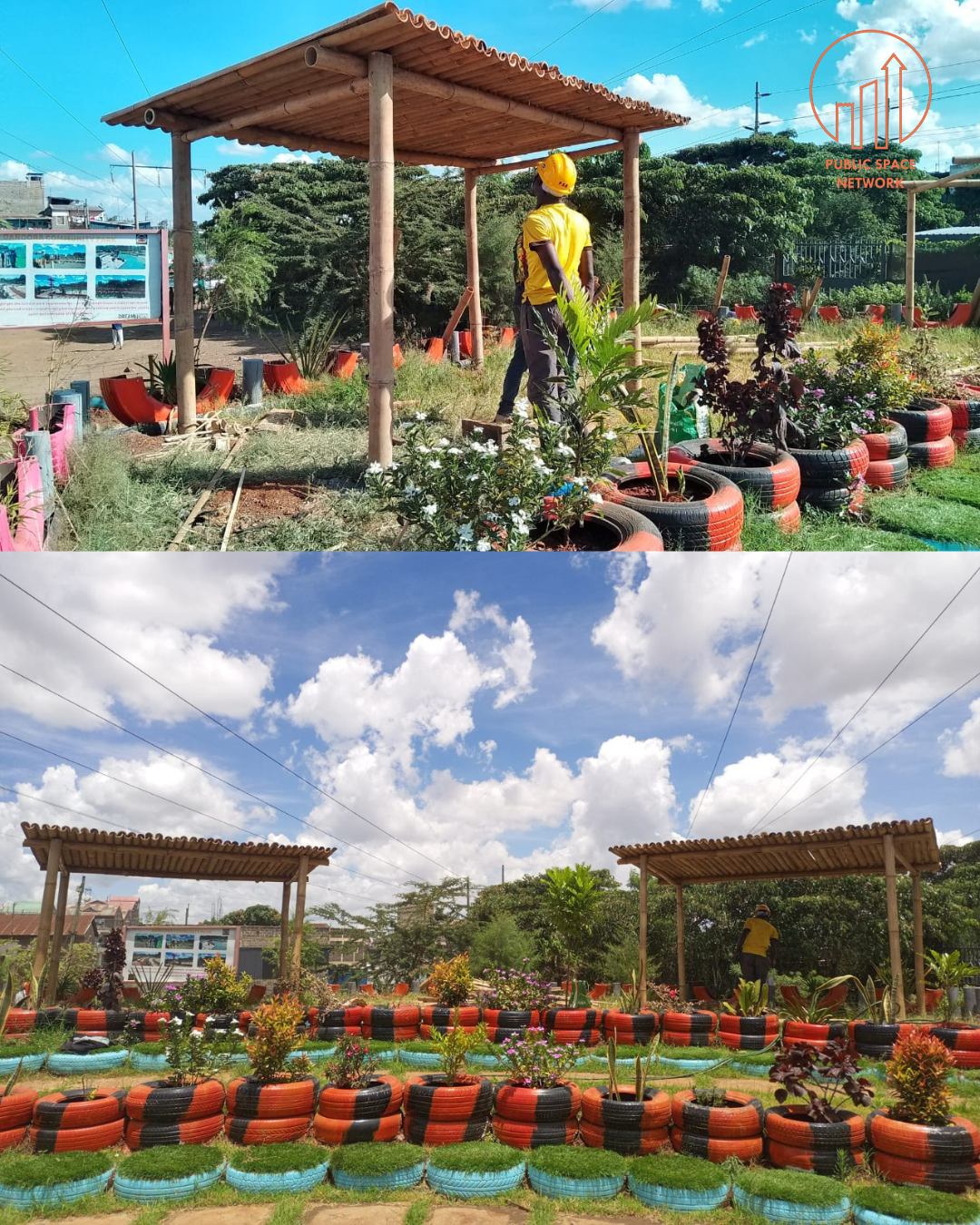
In Dandora Community Park, this idea is beginning to take form in a very practical way. The introduction of a mental health corner is not just about adding a feature. It is about creating a space within the park that reduces pressure and gives people room to pause, reflect and spend time without constant stimulation.
Built using locally sourced bamboo and shaped through community effort, it reflects something important. Wellbeing is not separate from daily life. It can be built into the spaces people already use, in ways that feel natural and accessible.
And this is not limited to one park. Across Nairobi, there is an opportunity to design spaces that do more than support movement and activity. Spaces that also support how people think, process and recover from the demands of everyday life.
Because sometimes, the biggest impact a space can have is not what it helps you do, but what it helps your mind let go of.
We continue sharing how public spaces across Nairobi are being designed to support everyday wellbeing in practical, often overlooked ways.
Follow our work to see how these ideas are being applied in real spaces and how environments can be shaped to support how people actually live and think:
Instagram ( https://www.instagram.com/publicspacenetwork/ )
TikTok: ( https://www.tiktok.com/@publicspacenetwork )
LinkedIn ( https://www.linkedin.com/company/public-space-network/?viewAsMember=true )
Facebook ( https://www.facebook.com/PublicSpaceNetwork )
Because improving wellbeing is not always about adding more. Sometimes, it is about designing spaces that take some of the pressure away.