


In many parts of Nairobi, climate challenges don’t arrive as surprises.
Flooding. Heat. Pollution.
They happen in patterns. In the same places, affecting the same communities over and over again. And yet, most responses still come after the damage is already done.
What if that could change? What if communities could identify risks early, understand them clearly and act before they escalate?
This is the starting point of the Cool Waters Academy.
Cohort 3 officially began on 7th April, bringing together youth and community members from areas like Dandora, Korogocho and Kamukunji. But the work does not begin with solutions, it begins with understanding. In the first phase, participants focus on something simple but powerful. Making sense of how climate change actually shows up in their own environments. Not as a global concept, but as something local, something visible, something measurable.
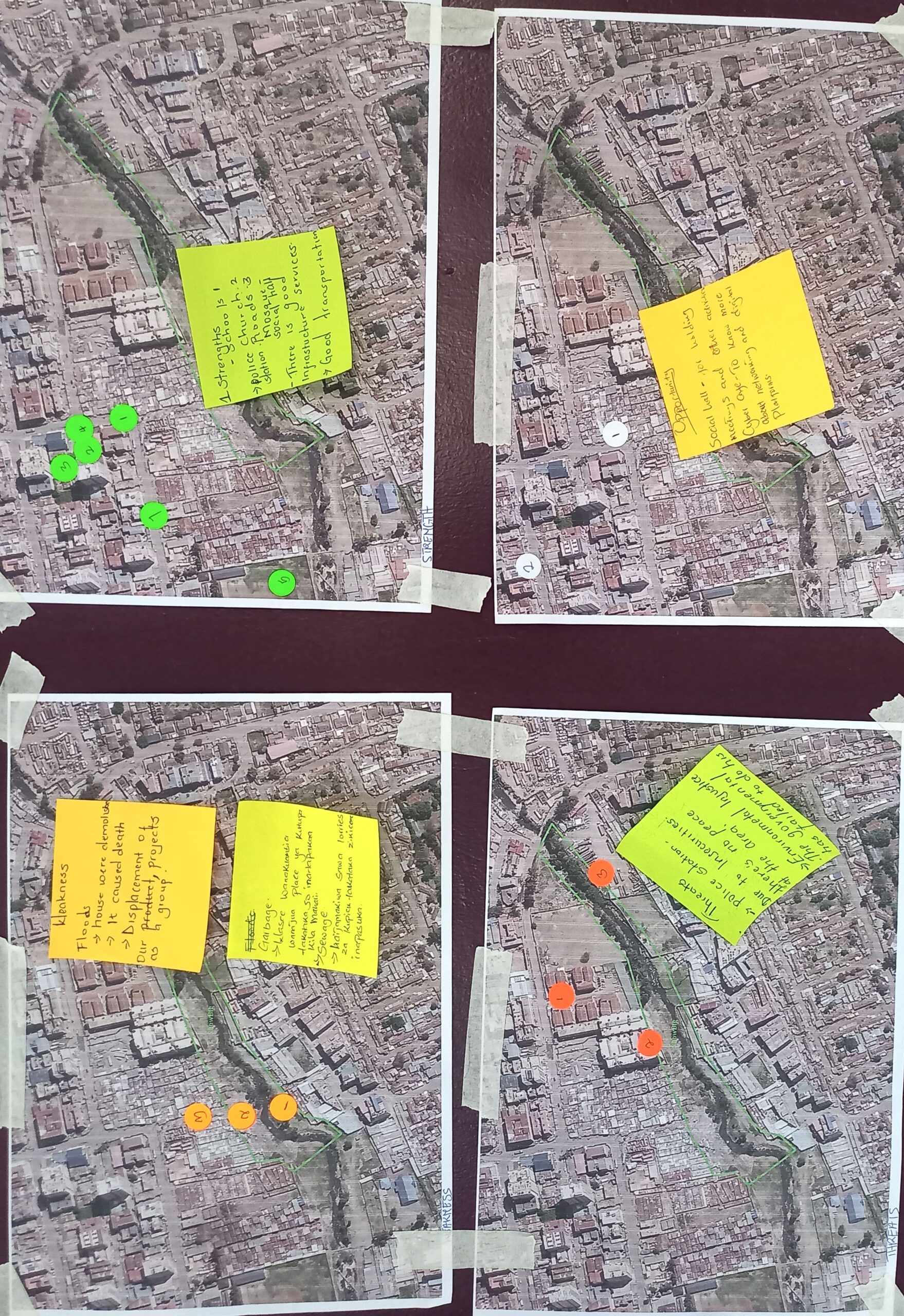
That understanding quickly moves from theory to action. Within the first two weeks, participants are already out in their communities. Walking through flood-prone areas, identifying pollution zones, mapping where risk actually exists based on lived experience. Not relying on assumptions, but on what they see, observe and know from being part of those environments every day.
This process does something important. It shifts communities from reacting to problems… to understanding them. And once a problem is understood clearly, something else becomes possible… planning. The ability to design responses that are grounded in real conditions. To identify what needs to change, to prioritize what matters most and to build solutions that are actually relevant to the people they are meant to serve.
This is what the rest of the academy builds toward. From understanding risks, to developing adaptation plans, learning how to engage decision-makers and eventually turning ideas into funded, actionable projects.
The academy is delivered through a partnership between Public Space Network, Dreamtown, UN-Habitat and Kounkuey Design Initiative. Each bringing a different layer of expertise. From facilitation and funding, to technical support and curriculum design. Together, they are supporting communities to move from awareness… to action.
Because climate resilience is not built through information alone. It is built through systems, skills, coordination and the ability to act before problems escalate.
We continue sharing how communities across Nairobi are building practical, on-the-ground responses to climate challenges and what it takes to move from risk to readiness.
Follow our work to see how these approaches are being applied in real communities, what they look like in practice and how you can be part of strengthening them:
Instagram ( https://www.instagram.com/publicspacenetwork/ )
TikTok: ( https://www.tiktok.com/@publicspacenetwork )
LinkedIn ( https://www.linkedin.com/company/public-space-network/?viewAsMember=true )
Facebook ( https://www.facebook.com/PublicSpaceNetwork )
Because the difference between reacting and preparing is often what determines the outcome.