


In Nairobi, public spaces are often designed around activity.
Places to move.
To gather.
To pass through.
But there is another role they can play that is rarely considered.
Supporting how people feel… and how they relate to the world around them.
Because the environment you spend time in does more than affect your mood. It shapes how your mind processes everyday life.
Research has shown that access to well-maintained green environments can reduce mental patterns linked to overthinking and negative thought loops.
Not by distraction.
But by changing how the brain responds to its surroundings.
Clean, cared-for environments also signal something important.
That a place is looked after.
And that reduces the need to stay on edge.
Over time, it becomes easier to relax, to feel safe, and even to trust the people around you.
There is also something more subtle. In environments that are visually overwhelming or chaotic, the brain works harder to process everything at once. That constant sensory load can lead to irritability and mental fatigue. But in cleaner, more organised spaces, that pressure is reduced. The mind does not have to work as hard just to exist in the space.
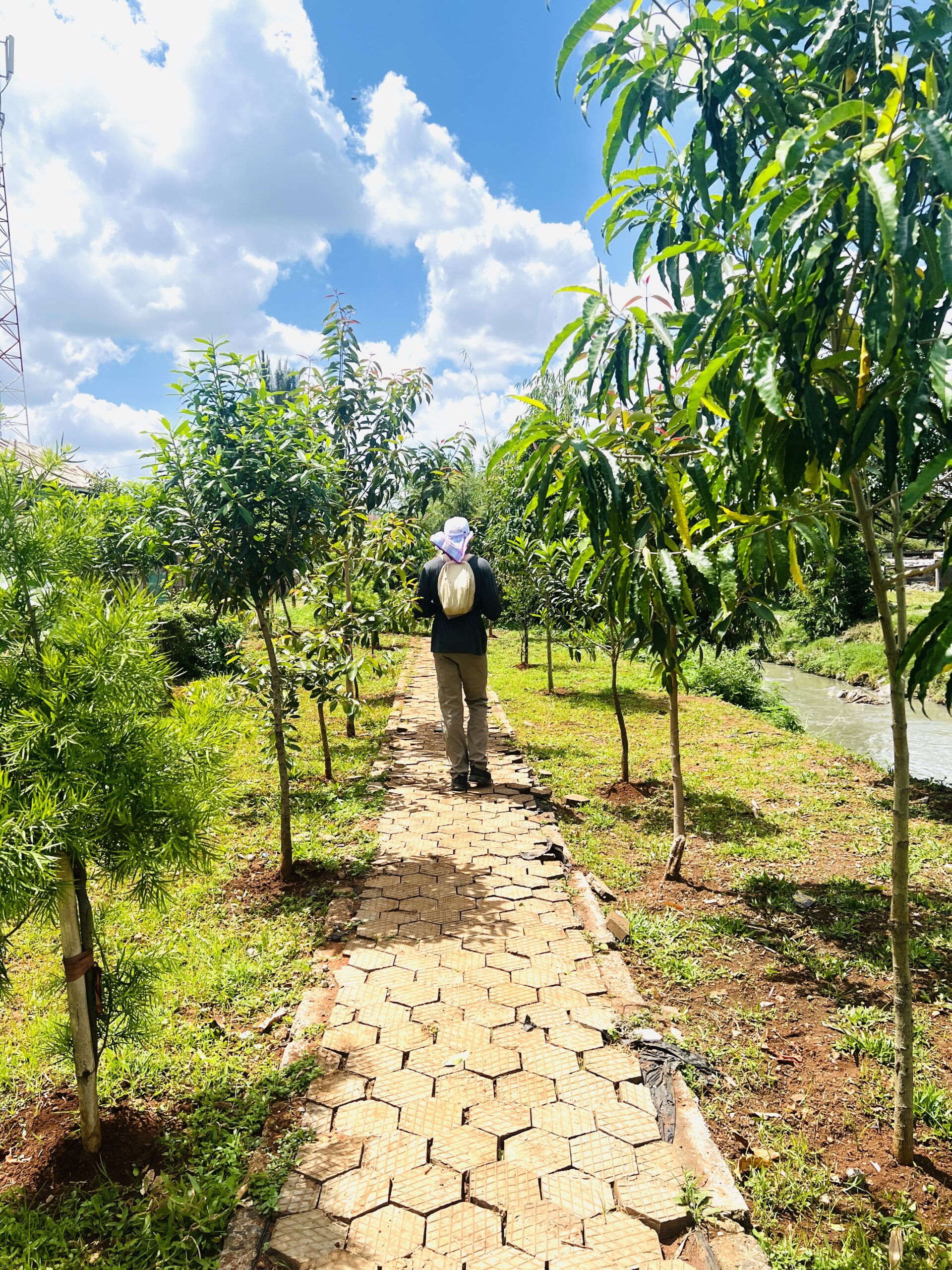
In Dandora Community Park, you can begin to see what this looks like in practice.
Parts of the park are already changing how people experience the space.
The amphitheatre, surrounded by plants and greenery, has started attracting butterflies.
It is a small detail.
But it signals something important.
That the environment is becoming healthier. Cleaner. More balanced.
And that changes how people respond to it.
Spaces like this do not just support activity.
They create conditions where it becomes easier to pause. To sit. To spend time without pressure.
Building on this, the recent inclusion of a mental health corner takes that idea further. It creates a space that is intentionally shaped for rest and reflection within the park. Not as an abstract concept. But as something physical. Something people can actually use.
Together, these elements begin to show what is possible. That public spaces can do more than accommodate movement.
They can influence how people think, feel and interact with their environment.
And this is not something limited to one park. Across Nairobi, similar design choices can be applied.
Not by replacing the activities of everyday life… but by supporting them in a more balanced way.
Because when public spaces support both how people move and how they experience a place mentally, they become more than spaces people pass through.
They become spaces that support everyday wellbeing.
We continue working with communities across Nairobi to design public spaces that support everyday life in practical, human ways. Follow our work to see how these ideas are being applied across the city:
Instagram (https://www.instagram.com/publicspacenetwork/)
TikTok: ( https://www.tiktok.com/@publicspacenetwork )
LinkedIn ( https://www.linkedin.com/company/public-space-network/?viewAsMember=true )
Facebook ( https://www.facebook.com/PublicSpaceNetwork )