


It is easy to assume that if a public space is improved, people will automatically take care of it.
Cleaner surroundings.
Better infrastructure.
More investment.
But in many cases, the behaviour does not change.
Littering continues.
Misuse continues.
The space slowly returns to the same condition it was in before.
Not because people don’t see the change. But because the conditions that influence behaviour have not changed. You cannot force people to care about a public space. But you can create conditions that make caring more likely.
The first is relevance.
When people benefit directly from a space, their relationship to it changes. If the space supports daily life — whether through small businesses, social activity, or community use — it becomes something people rely on. And people are more likely to take care of what they rely on.
The second is understanding.
Care is not automatic. People need to understand why it matters.
Why waste affects their environment.
Why misuse affects how the space functions.
Why small actions shape the overall condition of a place.
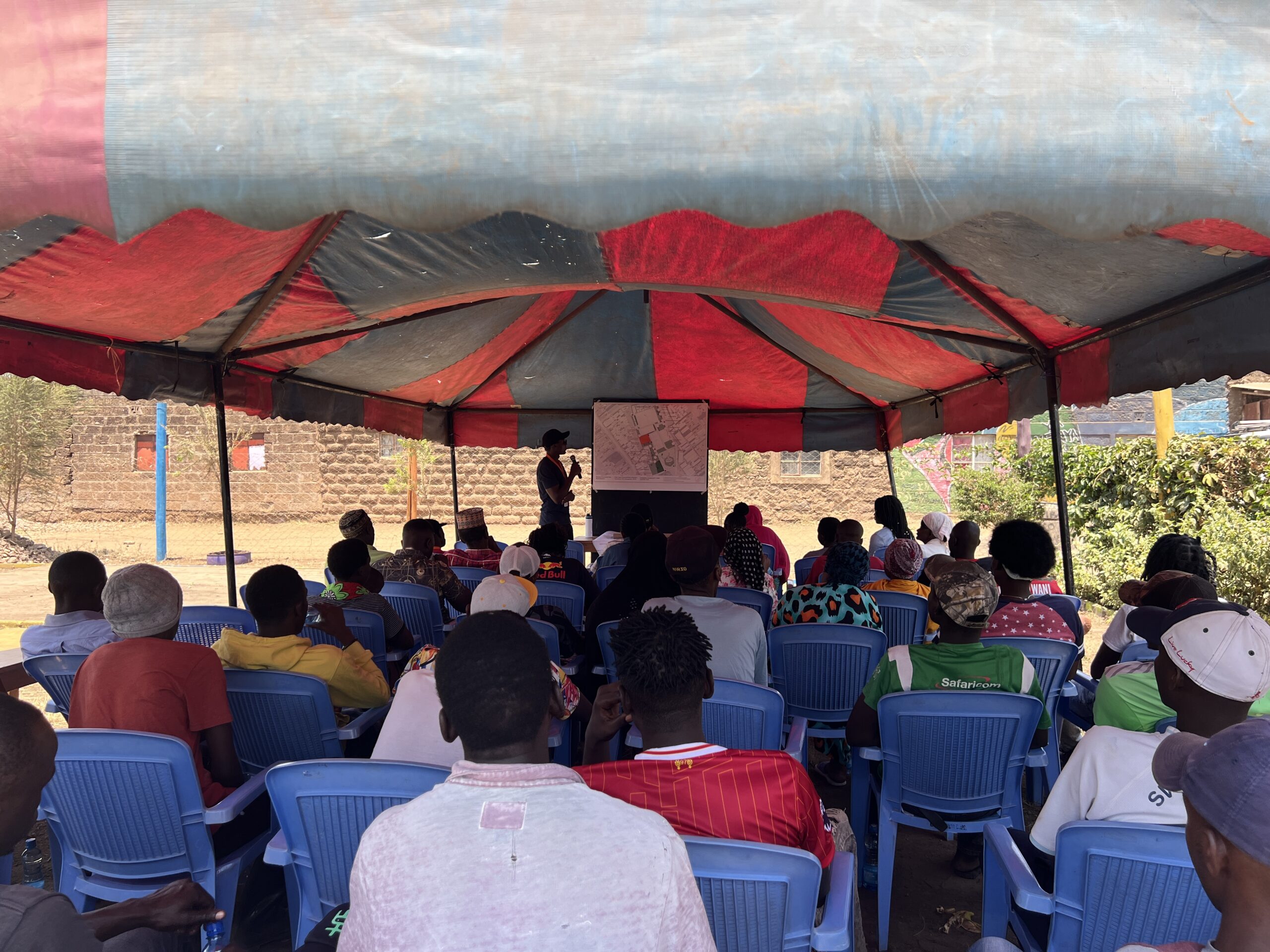
Through conversations, training and shared experiences, that understanding begins to build. And when people understand the impact of their actions, behaviour starts to shift.
The third is visibility of responsibility.
When no one is clearly responsible for a space, it is often treated as if no one owns it. But when it’s clear who is taking care of the space — through local representatives, youth groups, or organised caretakers — something changes.
Responsibility becomes local. And it becomes visible. People begin to see that the space is being taken care of by people like them. And that influences how they behave within it.
These three conditions — relevance, understanding and visible responsibility — are what shift behaviour over time.
Not instantly. But gradually.
Because public space is not only shaped by design. It is shaped by how people relate to it every day.
We continue sharing how communities across Nairobi are shifting from neglect to actively caring for and maintaining public spaces through structured engagement and participation.
Follow our work to see how these changes happen in practice:
Instagram: [ https://www.instagram.com/publicspacenetwork/ ]
LinkedIn: [ https://www.linkedin.com/company/public-space-network/?viewAsMember=true ]
Facebook: [ https://www.facebook.com/PublicSpaceNetwork ]
TikTok: [ https://www.tiktok.com/@publicspacenetwork ]
Because care cannot be forced… but it can be built.