



Many young people in Nairobi’s informal settlements shared the same assumption before joining the Cool Waters Climate Change Academy. They believed climate change is too big for people like us to solve.
They had heard the headlines, rising heat, heavier floods, polluted rivers, but the solutions always felt distant. The words belonged to scientists, policymakers, and experts, not to ordinary youth living next to the very spaces most affected.
But when they stepped into the Academy, that mindset began to shift.
The Academy wasn’t about sitting through lectures. It was about discovery, out in the field. This happened in neighborhoods and along the riverbanks where climate change is felt every day.
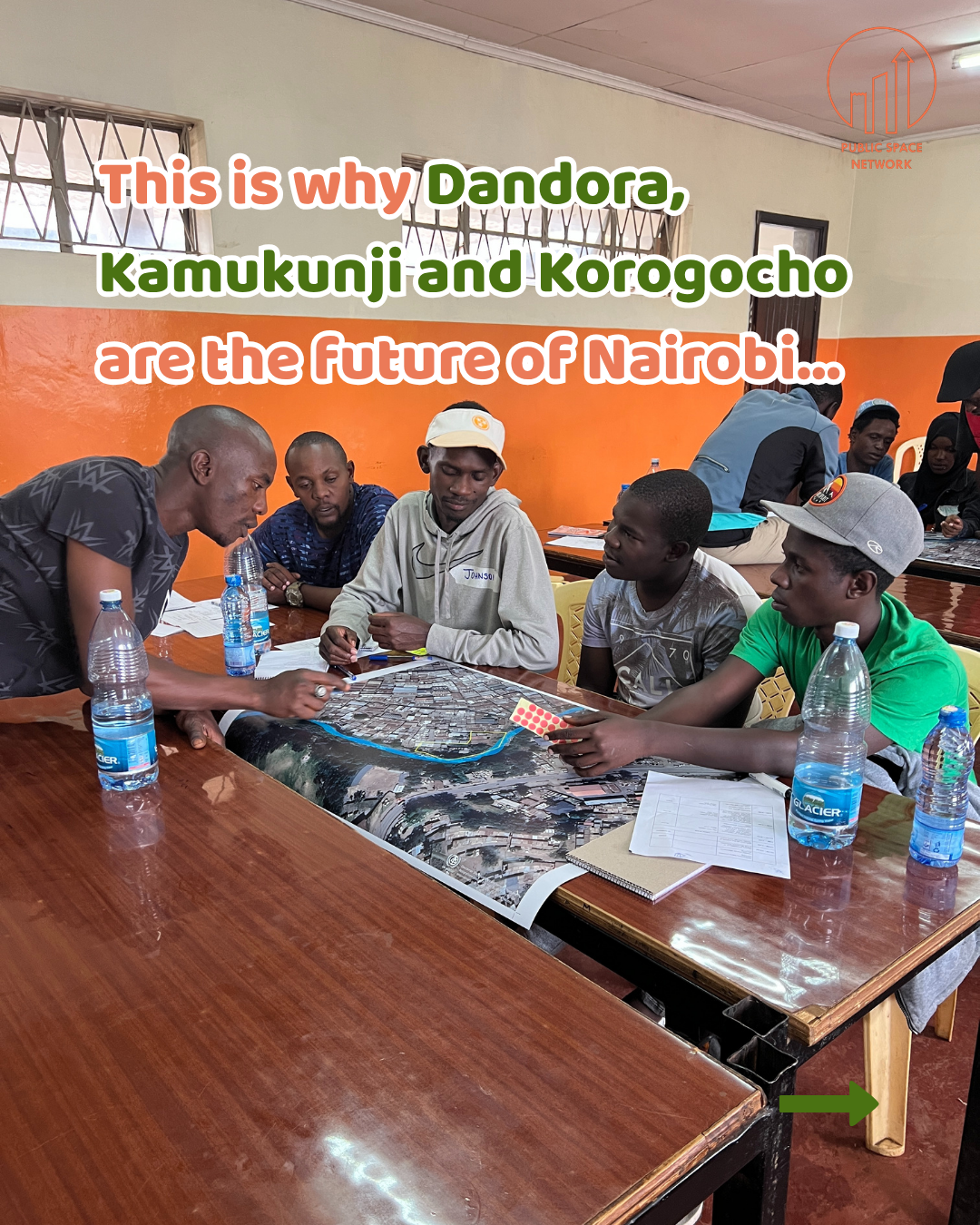
Trainees learned to map flood-prone areas, identify heat hotspots and design community-led nature-based solutions that were simple yet effective. They saw how trees, parks, and restored public spaces could help regulate temperature, absorb runoff water and bring people together.
“Before, I thought climate action was for experts,” said one trainee. “Now I know it starts right where I live.”
As the weeks went on, their confidence grew. By the third module, participants were no longer just describing climate risks, they were proposing solutions. Drainage systems designed with local materials. Green corridors to cool streets. Adaptation plans that reflected lived experience.
This was the turning point.
They stopped seeing themselves as learners and started seeing themselves as local experts in climate resilience.
Each session combined technical tools and local knowledge. GIS mapping blended with on-the-ground observation, data layered with stories. Facilitators adapted lessons to be practical and relatable. They used Swahili and Sheng (lugha ya mtaa / modern urban slang language). This helped describe everyday examples and make concepts accessible to everyone.
By the time they reached Module 5, Designing Climate Adaptation Plans, the discussions had become deeply rooted in ownership. Groups were drafting plans tailored to their own neighborhoods. They combined what they had seen on the ground with the tools they had learned to use.
But the most inspiring part of this journey isn’t just what they’re learning, it’s who is helping them learn.
The facilitators guiding each session aren’t external experts; they are community members who were trained through PSN’s train-the-trainer model. They’ve walked the same streets. They faced the same floods. Now, they’re helping their peers connect the dots between daily challenges and practical climate solutions.
As one facilitator shared, the Academy’s success comes from making lessons tangible.
“The practicals brought the theory to life,” he said.
Another facilitator reflected on how important it is to use local language when explaining complex concepts.
“At first, language was a barrier,” she explained. “Once we used Swahili and Sheng, it was easier for them to understand. It also made participation easier.”
You can watch their reflections here:
🎥 Facilitator on practicals bringing theory to life ( https://www.instagram.com/p/DPzJg5CgE8Q/ )
🎥 Facilitator on overcoming language barriers ( https://www.tiktok.com/@publicspacenetwork0/video/7559317789844966667 )
These insights reveal the heart of the Academy. It’s not about teaching the community. It’s about learning and co-creating with them. The trainees are now approaching their final module, Presentation, Leadership & Implementation Readiness. Next week, they’ll share their adaptation plans publicly, ready to turn knowledge into neighborhood action. But even now, midway through the process, the transformation is clear: climate literacy is empowering climate leadership.
As PSN continues to nurture this growth, one truth stands out. When local people are trusted with knowledge, they don’t just adapt to change. They lead it.
Follow the Cool Waters Climate Change Academy journey on PSN’s platforms. Youth and community facilitators work together to design real solutions. These solutions aim for a more climate-resilient Nairobi, one module, one neighborhood at a time.