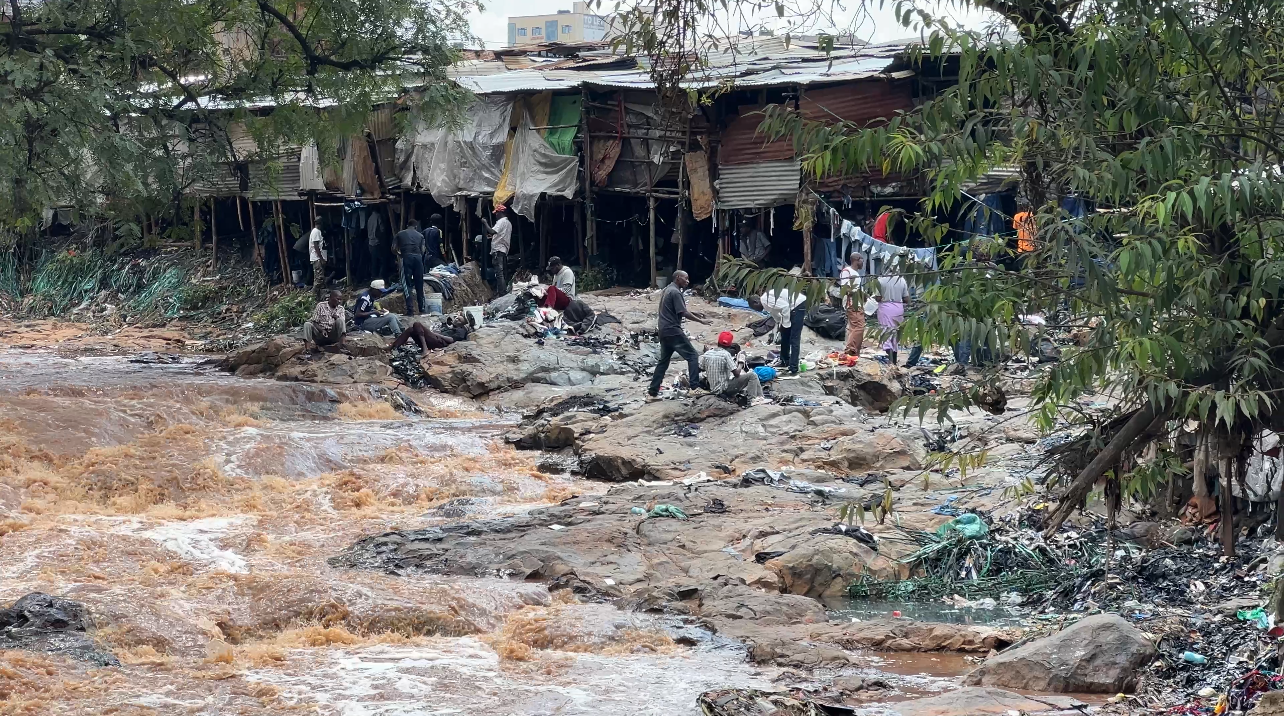


If someone told you the Nairobi River ends up on your dinner plate, would you believe them?
It sounds impossible, but it’s true. Every day, the same river that carries waste from homes, factories and open drains flows downstream into the Athi River Basin. From there, it irrigates almost a third of the vegetables sold in Nairobi’s markets.
Spinach, sukuma wiki and tomatoes grown with polluted water find their way back to the city’s kitchens. The pollution we ignore in the river becomes the pollution we eat.
RiverLife TV’s ongoing monitoring has revealed how deeply this problem runs. While headlines often focus on big clean-up budgets and new government initiatives, few people talk about what happens in the places where those efforts are supposed to reach.
At the Kamukunji stretch, PSN’s river stewards recently confirmed that a major sewer trunk which had previously leaked into the river was finally repaired. The fix is a positive sign, but it also reminds us that progress must be tracked to make sure it lasts. Further downstream, the water darkens as untreated waste and runoff from surrounding industrial zones continue to find their way into the flow. Beyond Ruai, that same contaminated water is used to grow vegetables that look fresh but carry hidden toxins.
Every polluted litre that leaves Nairobi eventually returns in another form: through food, through soil and through livelihoods. The cost of neglect does not stop at the riverbank. It reaches homes, schools and families across the city.
If Nairobi is to truly restore its river, it must move beyond announcements and hold everyone accountable. That means not only monitoring pollution sources but also ensuring that communities are part of the conversation. Real change happens when data is public, when citizens can see progress for themselves and when every actor — from industries to institutions — is held responsible for their impact.
A clean river is more than an environmental goal. It is a public health necessity, a matter of dignity and a reflection of shared responsibility.
Stay informed and involved. Follow RiverLife TV on YouTube (https://youtube.com/@riverlifetvkenya?si=cd1LhRjf8Yc-moJ3) and keep up with PSN’s updates on Instagram (https://www.instagram.com/publicspacenetwork/), TikTok (https://www.tiktok.com/@publicspacenetwork0), and LinkedIn (https://www.linkedin.com/company/public-space-network/?viewAsMember=true) to see how accountability, transparency, and community participation can help bring the Nairobi River back to life.