



Before any Youth City project breaks ground, there is one rule that overrides budgets, timelines and even design expertise. It is a rule many people do not know exists, yet it determines the success of every space PSN builds. Nothing gets built until the community says yes. Why does this rule matter so much? Because behind every final design is a long list of changes made by the people who will actually use the space and changes that reshape the project in ways no technical team could predict.
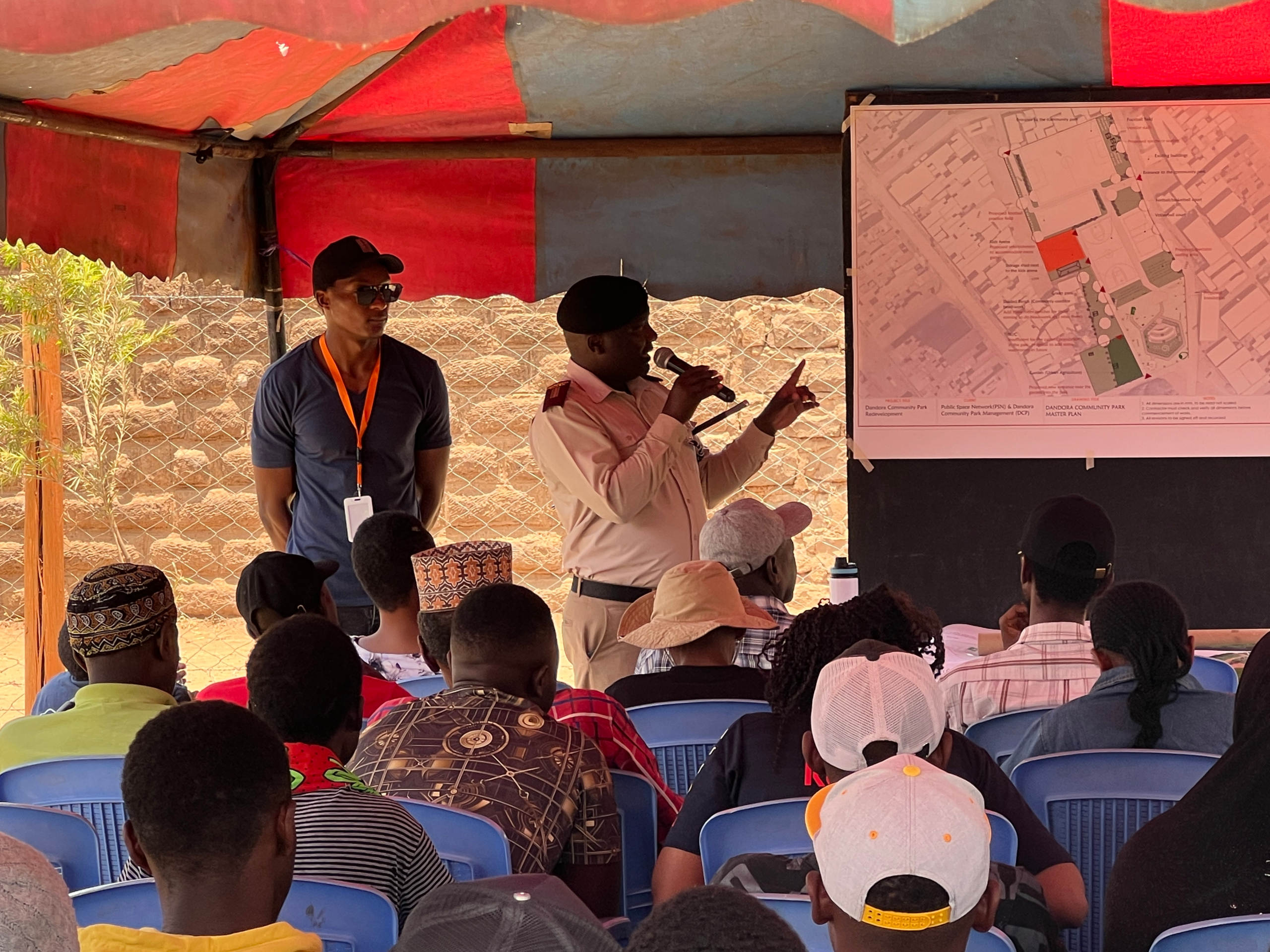
At Dandora Community Park (DCP), this rule became the backbone of the entire transformation. During the public participation session that happened in September 2025, residents reviewed the initial design. They did not simply approve it. They scrutinized it, questioned it and reshaped it based on lived experience. They said: “People with disabilities must be able to access this space.” The original plan proposed adding ramps, but once engineers evaluated the terrain, the slope required would have been too steep for safe use. So the design changed again, this time with a more effective solution. The first row of the amphitheater became priority seating for people with disabilities, elders and anyone who needed easier access. A small but meaningful shift that honored dignity in a real, practical way. Next, residents said: “Women need sanitary bins in the washrooms.” Because safety and dignity begin with the basics. The design was updated immediately. Then they said: “Security must be prioritised.” So the plan evolved once more. Lighting was added to increase safety after sunset reducing dark corners that once made the space feel unsafe. And the community proposed a system where youth managing the park would guard it in shifts.
These afre adjustments that came from community voices. And every one of them made the park better. This is why Youth City spaces succeed where many urban projects fail. They are not built for communities. They are built with them. When communities shape the design, ownership grows naturally, maintenance becomes consistent and stewardship becomes cultural. DCP embodies this truth. The same community that redesigned the space is the one committed to sustaining it. Not because they were asked to, but because the space carries their decisions, their priorities and their fingerprints. Youth City embraces a process that is slower than ordinary construction, more complex than typical design work and far more accountable. But it delivers something deeper than infrastructure. It delivers spaces where people feel safe, places shaped by those who use them, dignity built into the environment, and long-term stewardship that cannot be bought. Because transformation is never just about structures. It is about people. And the people who shape a space are the ones who will keep it alive. This is the rule that changes everything and the reason Youth City works.
Stay tuned for more stories from the Youth City journey on our storyboard as we continue to share how communities are reimagining ownership and care across Nairobi. You can also follow PSN for more updates and insights on Instagram: https://www.instagram.com/publicspacenetwork/ TikTok: https://www.tiktok.com/@publicspacenetwork0 LinkedIn: https://www.linkedin.com/company/public-space-network/