


What does pollution look like up close?
Not in reports, not in budgets, not in drone shots, but in the lives of people who wake up every day next to the Nairobi River.
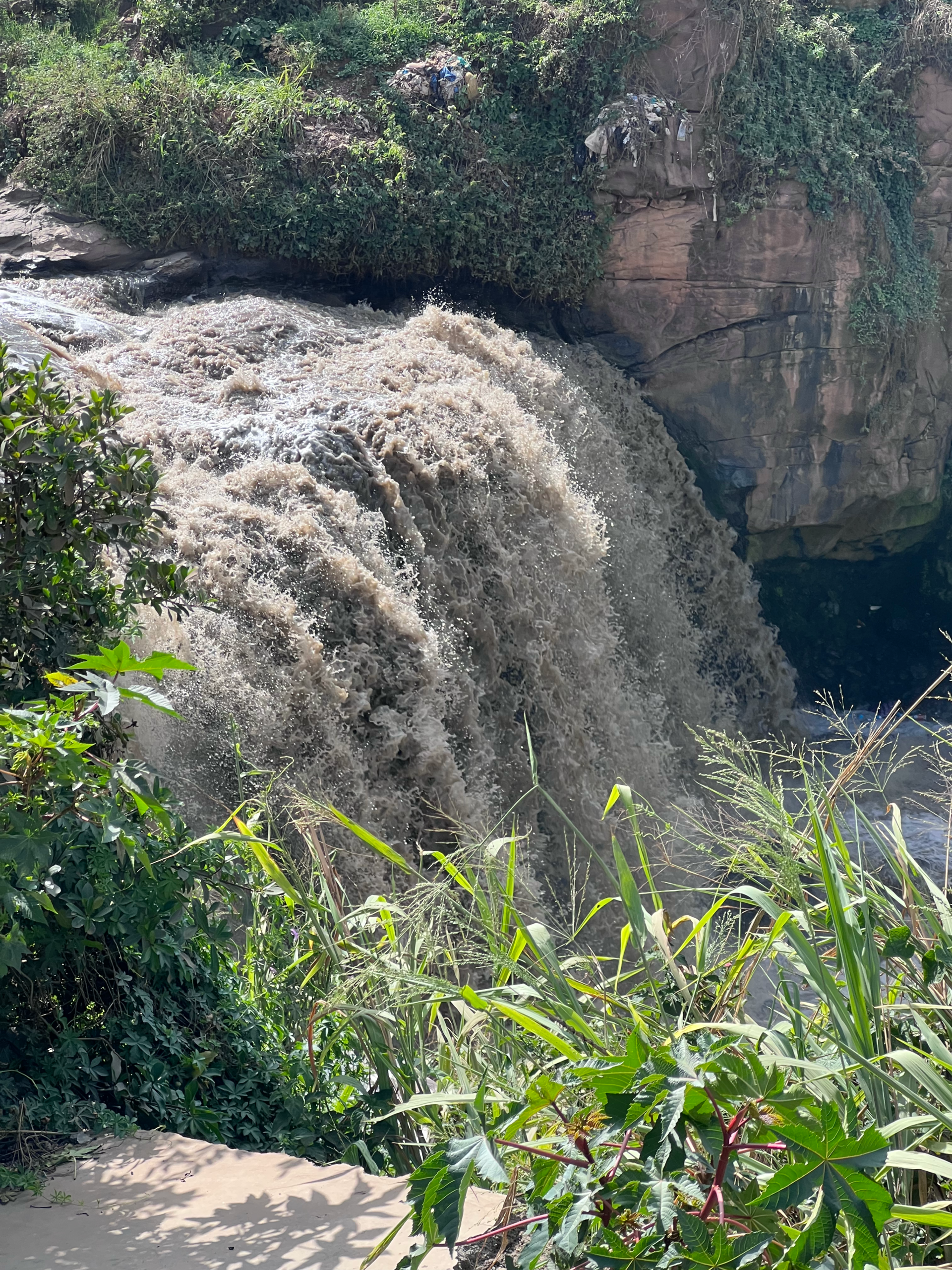
Along the Kamukunji and Gikomba stretches, the river is not an abstract environmental issue. It is a smell that drifts into homes, a flood that sweeps through pathways, a muddy current that stains the edges of daily life. Here, the Four Horsemen of pollution are not statistics. They are neighbors.
When broken sewer lines discharge into the river, it doesn’t just mean contamination. It means families living a few meters away spend entire rainy seasons fearing that the next overflow will enter their homes. When textile waste piles along the banks near Gikomba Market, it doesn’t just block the river. It blocks dignity, turning public spaces into dumping corridors where children play close to waste that should never have reached their neighborhood in the first place.
Industrial waste adds another layer of quiet harm. In downstream sections where water turns dark and heavy with chemical traces, residents describe the river with the same words over and over again: dirty, dangerous, polluted. Street interviews by the RiverLife project revealed a painful truth. People see the river every day, but many do not know where it begins, where it ends, or who is responsible for fixing it. Living with pollution has made it feel normal.
Then there is unplanned land use. In crowded informal settlements near the river, drainage is limited and solid waste systems are overstretched. When floods come, they sweep through these communities first carrying waste back to the river and pushing sewage toward doorsteps. What looks like a “river problem” from a distance is, up close, a human problem. It is fear, inconvenience, constant repair and a loss of safety and control.
This is the human cost of pollution. It is invisible in budgets, unnoticed in project announcements and too often ignored in decision-making rooms.
Through the RiverLife project, PSN is working to document these lived realities through stories, data and continuous monitoring along the river’s most vulnerable stretches. River stewards stationed from Dagoretti to Kamukunji help capture what the river is telling us. They track where water quality shifts, where dumping persists and where communities are most affected. Their work helps connect environmental truths to the daily lives of the people most impacted by them.
Because restoring the Nairobi River is not only about removing waste or repairing infrastructure. It is about restoring dignity. A clean river is a public health issue, a safety issue and a justice issue. The people who live closest to the river should not carry the heaviest burden of its pollution.
A future with a cleaner, safer Nairobi River depends on more than cleanups. It depends on listening to the communities who live at the heart of the basin and making their experiences central to accountability and change.
Stay with us as the RiverLife project continues to uncover these stories and track progress along the Nairobi River. You can also keep up with our work through PSN’s LinkedIn (https://www.linkedin.com/company/public-space-network/), Instagram (https://www.instagram.com/publicspacenetwork/) and TikTok (https://www.tiktok.com/@publicspacenetwork0) as we document what it really takes to bring the river back to life.