

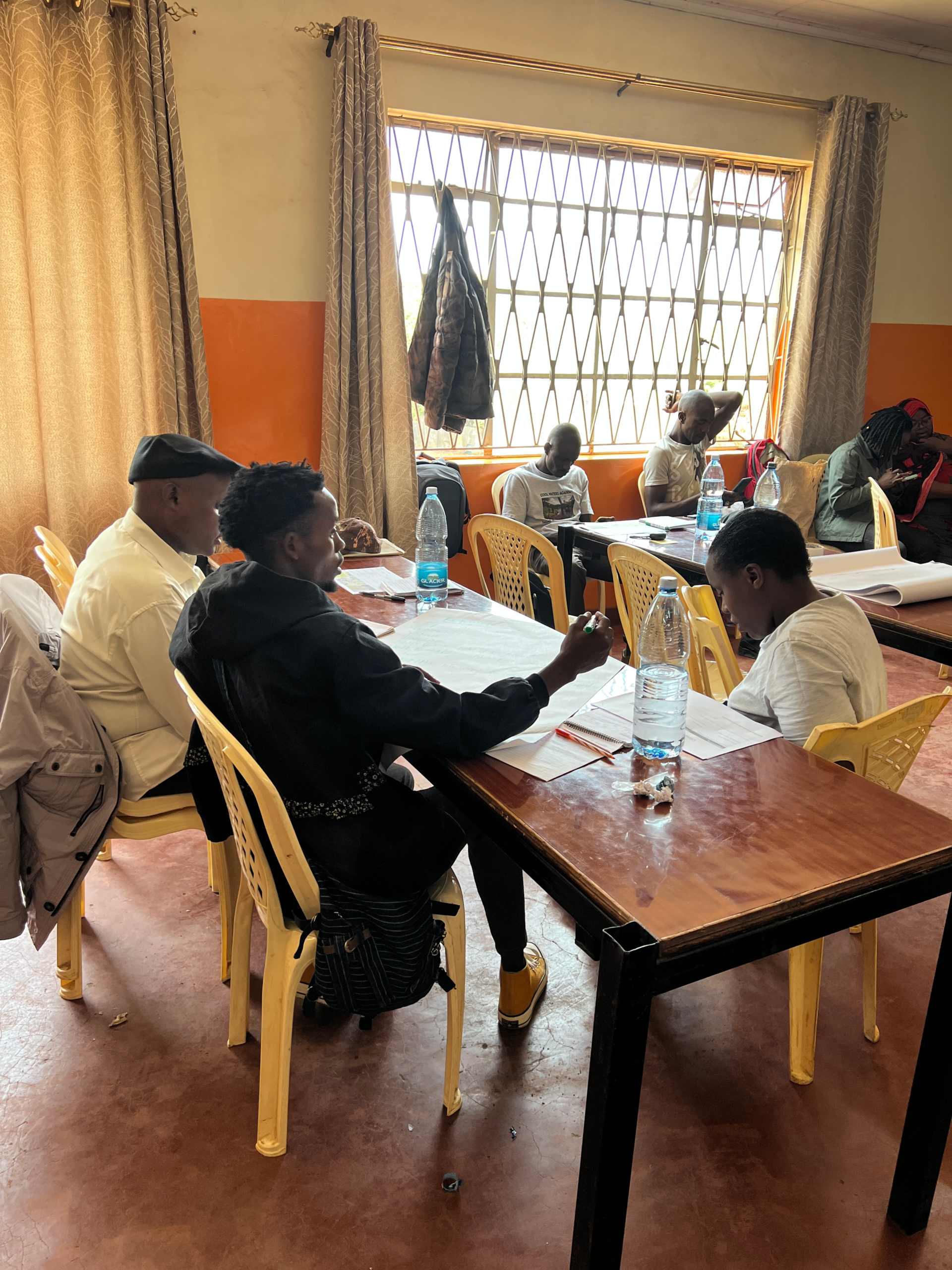


For weeks, participants have mapped floods, studied heat pockets, and walked the winding paths of Nairobi’s most climate-vulnerable neighborhoods. In Module 6 of the Cool Waters Climate Change Academy, the focus shifts from learning about climate risk to learning how to act on it and how to be heard. This phase turns knowledge into advocacy. Trainees develop clear proposals, practice concise messages, and build simple stakeholder maps that show who to approach, how to engage, and what evidence to bring. The work centers on translating science into stories that decision-makers and communities can understand, with a strong emphasis on nature-based solutions that fit local realities. Small group sessions focus on action planning and peer feedback. Participants outline goals, beneficiaries, timelines, and sustainability measures for ideas such as rain gardens, improved drainage, and community waste systems. Role-play exercises help them practice speaking in community forums and meetings where influence matters. A core strength of the Academy is who facilitates it. Facilitators are trained community members who understand local context and common barriers. They model how to use clear language, visuals, and practical examples so that complex ideas feel accessible and credible. By the close of Module 6, one message is consistent. Knowledge alone does not change a city. Confident voices, practical proposals, and steady advocacy do. These youth are preparing to present their adaptation ideas where it counts, with the clarity and ownership that help ideas become action. 🌱 Call to Action (CTA) Follow the next steps as trainees refine and present their climate adaptation proposals across Nairobi’s neighborhoods. Keep up with the Cool Waters Climate Change Academy on Instagram (https://www.instagram.com/publicspacenetwork/), TikTok (https://www.tiktok.com/@publicspacenetwork0), and LinkedIn (https://www.linkedin.com/company/public-space-network/?viewAsMember=true) for updates and behind-the-scenes moments.