

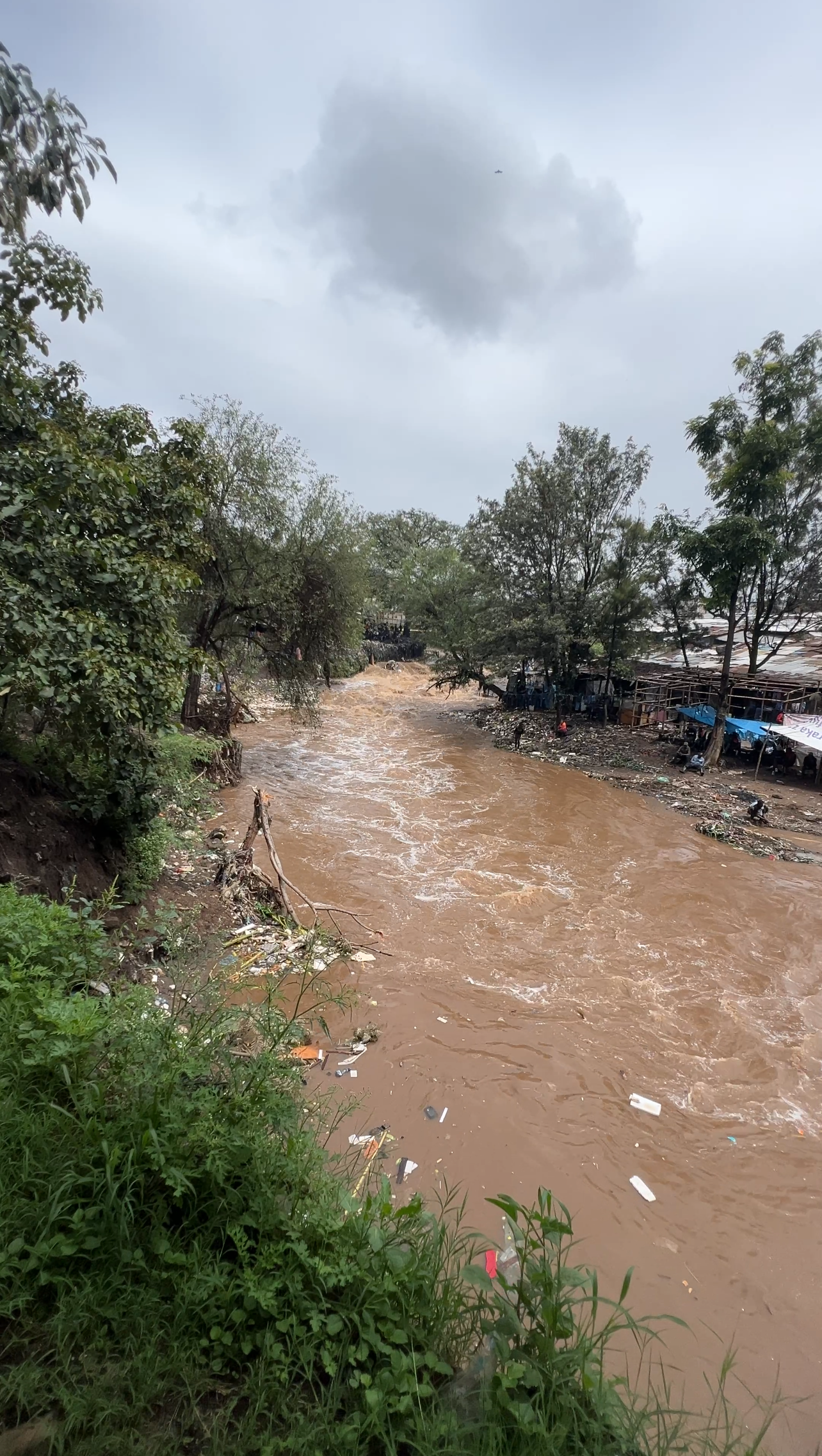


Most people living in Nairobi can describe what the Nairobi River looks like today. They can talk about the smell, the color, the pollution, the flooding and the danger. But ask them where the river starts or where it ends and the answers become uncertain. Street interviews done through the RiverLife project showed something striking. Many Nairobians see the river every day, yet most cannot say where its journey begins or how it moves through the city.
That lack of understanding is not a small detail. It shapes how the river is treated. It shapes how much we care about it. It shapes how easily we accept its decline.
Because here is the truth most people never get to see. Nairobi River begins in a place so clean and so quiet that it barely resembles the river that winds through the city. The river is born at Ondiri Swamp in Kikuyu through the Nyong’ara tributary. The water at the source is clear and steady because the swamp acts as a natural reservoir. It filters, holds and slowly releases water that feeds the river system. This is the Nairobi River before the city touches it. A river that begins with potential.
The first few kilometers tell a different story. By the time the river reaches Dagoretti Market roughly four kilometers from its clean source the water has already changed. Solid waste appears along the banks. Runoff from informal markets enters the flow. The speed of degradation is shocking. What begins as a clear tributary becomes visibly disturbed long before it reaches the city center.
This early shift is one of the most important truths about the river and also one of the least understood. If people do not know where the river starts or how quickly it gets polluted they are more likely to assume that the river has always been dirty. They are less likely to imagine what it can become. They are less likely to feel responsible for it or demand accountability when systems fail.
Understanding the river’s journey builds ownership. Ownership builds stewardship. When people know how the river flows through their neighborhoods and what harms it at each stage they become more invested in protecting it and more confident in speaking up when something goes wrong. Knowledge becomes motivation. Motivation becomes action.
This is why the RiverLife project is walking the river from its source to its end. Stewards stationed along key sections collect stories, samples and data that reveal the river’s true condition from upstream to downstream. Their work is not only about documenting pollution. It is about reconnecting Nairobians to a river most of us have forgotten how to see. A river that begins clean. A river that carries the consequences of the systems around it. A river that can recover if people understand it, value it and demand better.
Because you cannot protect what you have never truly known. You cannot fight for something you cannot picture. And you cannot fix a river when you only interact with the part that is already broken.
A healthier Nairobi River starts with understanding its full story. Not just the polluted parts. Not just the headlines. The whole journey from Ondiri to Ruai and everywhere in between.
Stay tuned as the RiverLife project continues mapping this journey and revealing the realities that shape the river we depend on every day.