

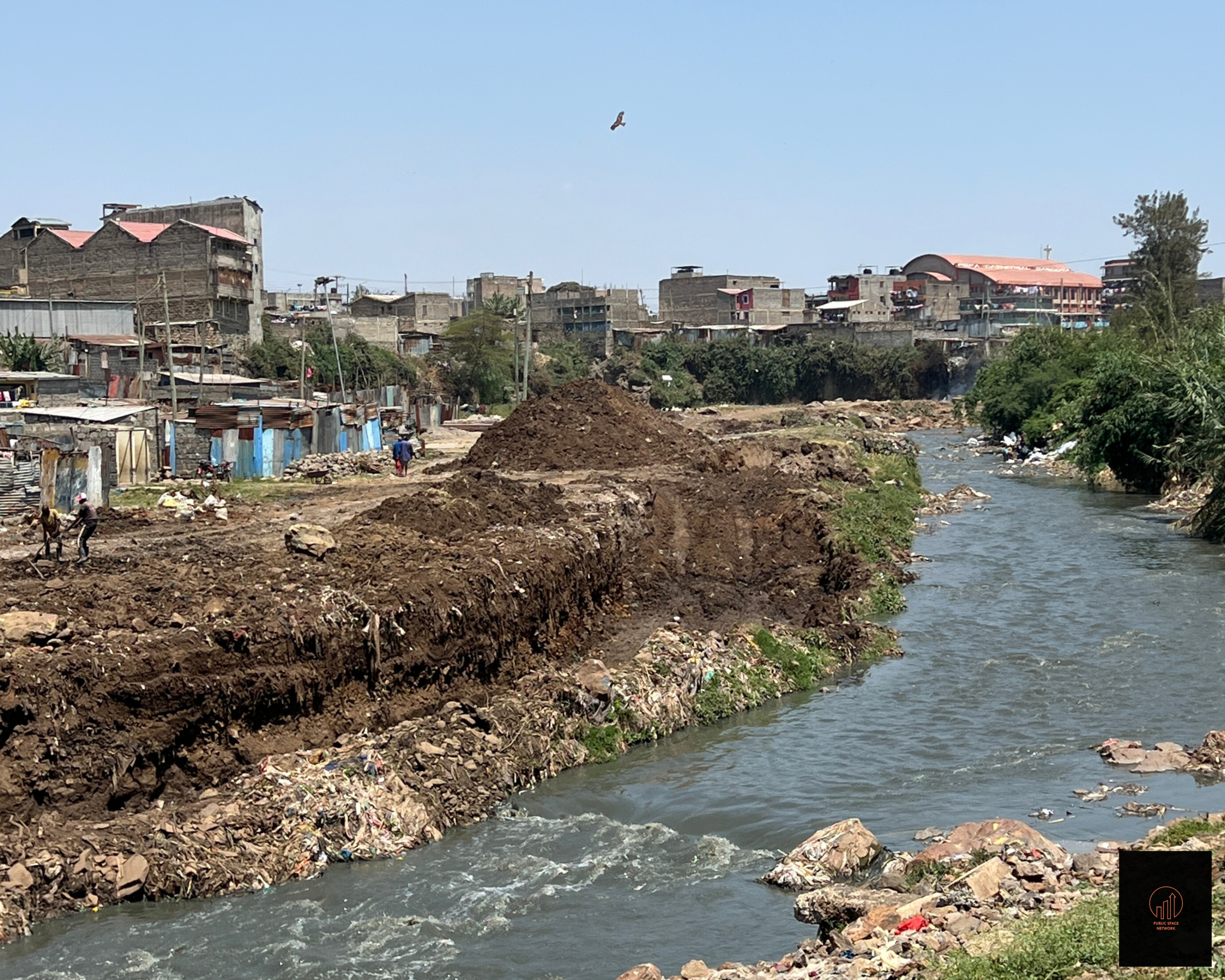


Have you ever wondered where the Nairobi River starts its journey? It doesn’t start in the city, but in the serene Ondiri Swamp, just outside Kikuyu. From here, it winds its way through neighborhoods, markets, industries, and informal settlements before joining the Athi River downstream. For decades, it was a lifeline; feeding farms, sustaining biodiversity, and offering fresh water to communities. But ask anyone living along its banks today, and the story changes. In recent interviews by Public Space Network , Nairobians described the river as “a dumping site,” “a health hazard,” and “a forgotten treasure.” Flooding during heavy rains makes the problem worse, washing solid waste through settlements like Kibera and Mathare.
What if we, me and you, turned this around? A cleaner Nairobi River means less flooding in our neighborhoods, fresher air in the city, and beautiful green spaces for our families to enjoy, safer food on our plates: since at least 30% of Nairobi’s fresh food comes from farms irrigated by these waters. It also means pride; pride in a city that values nature and collective wellbeing. The good news is, we are not starting from scratch. Change has already begun with local communities and the Nairobi City County government in collaboration with the Nairobi Rivers Commission (NRC) and Public Space Network: In Dandora, the river channel has been widened and heavy machines are on site to construct gabions to protect eroded riverbanks, while new bridges are linking communities once cut off from one another. At Chiromo and Globe Roundabout, constructed wetlands are filtering polluted water before it flows downstream.
Now I know you’re curious about what you can do, starting from your home. Check out this step many people miss https://www.instagram.com/p/DNkSUpLCbsO/?igsh=MW1qZjZ1cGkyZmp1Zw== .
But most importantly, you can walk with us at PSN as we tell the story of the Nairobi River and how it impacts your life, through Riverlife TV. Catch the first episode here https://youtu.be/s8fKQGms4Lc?feature=shared