



It is week three of the Climate Change Adaptation Academy, and things have taken a major shift. Do you remember what the Academy is about? It’s a practical learning journey where three community groups; Badilisha Mtaa from Kiambiu, BRICS from MotherLand, and Kinyago United from Kinyago, come together to understand climate risks and design their own solutions. Each week builds on the last, moving step by step from awareness, to mapping risks, to exploring real projects, and now into creating full adaptation plans. If you’re joining the story now, this is where the journey gets really exciting. In the earlier modules, participants uncovered the risks their mtaas face from floods and extreme heat. They made hazard maps that revealed flood-prone areas and heat hotspots often missed in official maps. Last week, they visited the National Museum and Michuki Park to see nature-based solutions in action, learning how green spaces, restored riverbanks, and well-designed parks can fight climate impacts while improving daily life. These visits were more than sightseeing. They gave participants a clear picture of what works in practice and sparked ideas for their own communities.
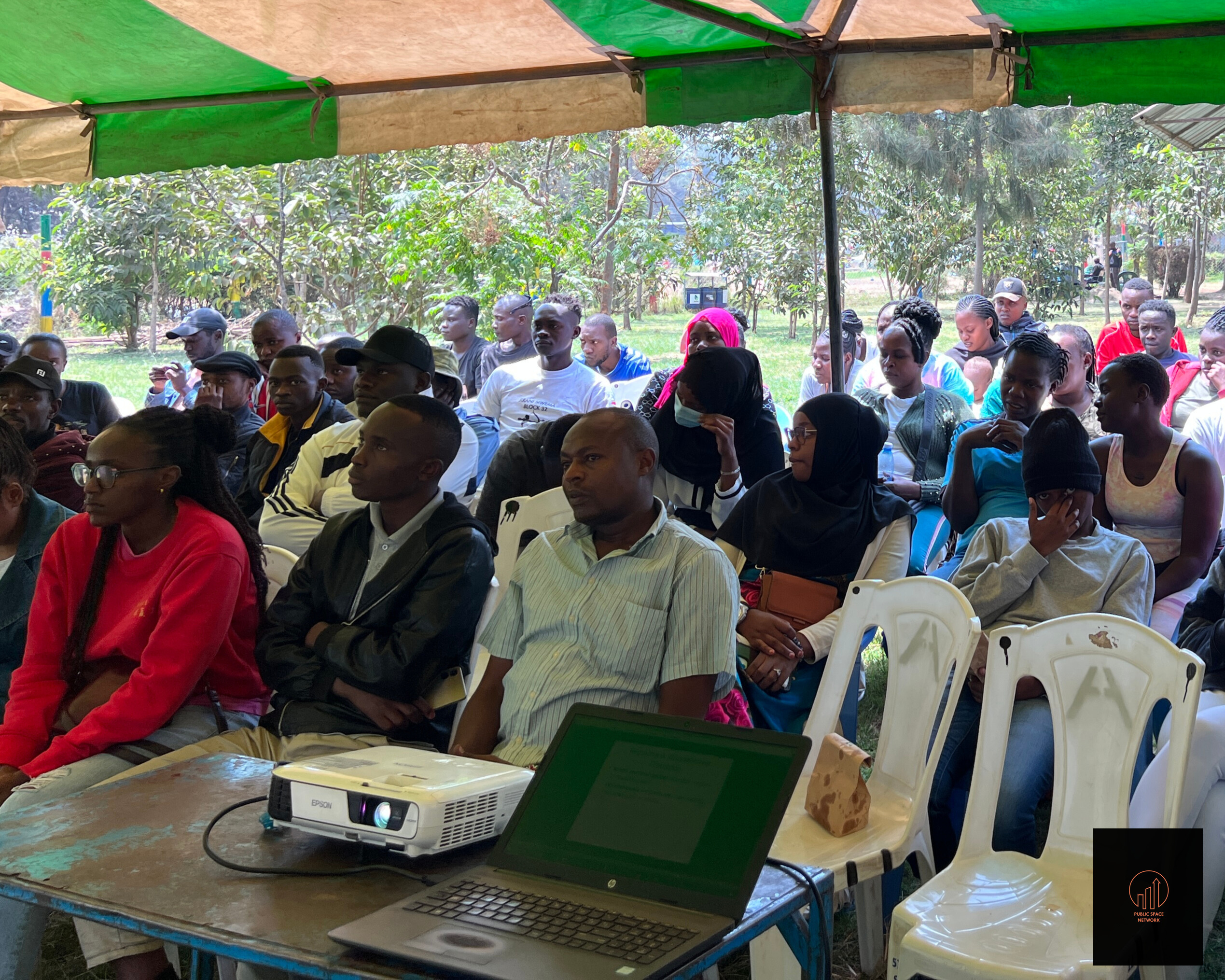
This week, the Academy moved from observation to action in Module 4: Co-Development of Adaptation Plans. Over three days, participants rolled up their sleeves to design strategies tailored to their neighborhoods. They began by defining what they wanted to achieve; the goals of their adaptation plans. Each group then mapped out their area, pointing out streets, homes, and public spaces most affected by floods or heat. Using what they had learned in earlier modules, they analyzed current and future hazards and identified the people, infrastructure, and livelihoods most at risk. Next, they looked inward exploring what their communities already had: strong networks, open spaces, or ongoing initiatives that could support climate action. From there, they set clear, realistic goals and brainstormed solutions that would work best for them. Ideas ranged from planting trees and restoring drainage systems to creating shared shaded resting areas. Once all the ideas were on the table, participants discussed what was possible within their available resources. They compared the social, technical, and environmental benefits of each option, narrowing them down to actions that were practical and affordable. By the second day, the groups came together to co-develop one shared plan combining their strengths and learning from one another.
The room was alive with energy and collaboration, filled with maps, sketches, and lively discussions. The final day focused on refining their own community plans, with participants lending their skills where needed. By the end of the module, each group had created a draft adaptation plan; a working roadmap showing how their community could reduce flood risks, make their neighborhoods more comfortable during heat , and strengthen resilience to climate impacts. These plans are not final yet, they are living documents, ready to grow with new ideas and support. But even at this stage, they mark a big step forward. For the first time, communities have practical, data-driven plans built from their own experiences and priorities. And perhaps the most exciting part? This is only week three. With these drafts in hand, the communities are now preparing to test their ideas on the ground; projects that bring greener streets, cooler neighborhoods, and safer homes during floods. Projects that protect people, restore nature, and inspire others to do the same. The Academy is proof that when the community leads, the solutions are practical, affordable, and built to last.