
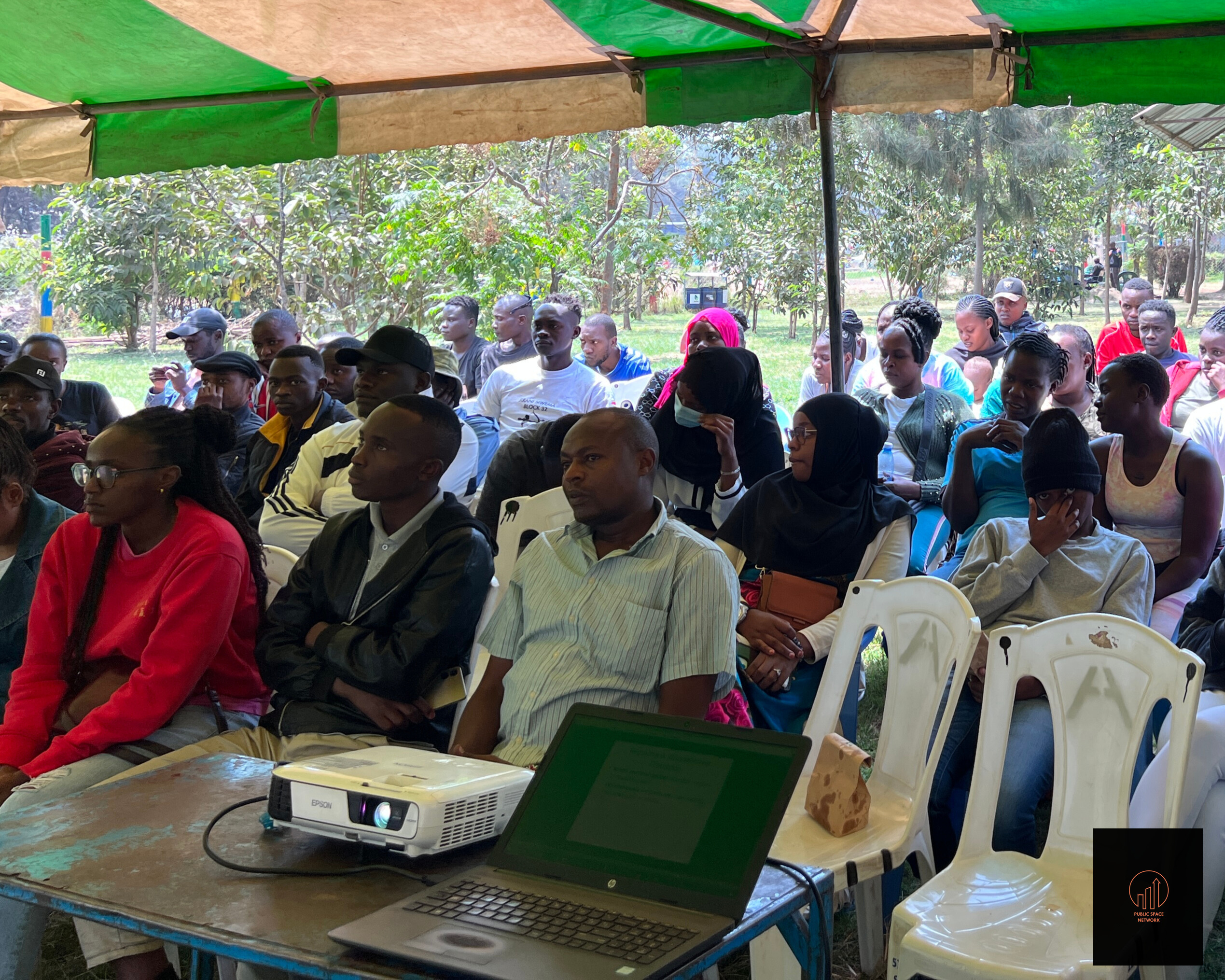


In many neighborhoods across Nairobi, young people face the same problems every day: roads that flood, playgrounds and parks that turn into dumping sites, and families struggling with extreme heat that makes daily life unbearable. They talk about these issues among themselves, yet when county budgets are being discussed, their voices are often missing. For too long, decisions about their lives have been made without them. Now imagine this: thirty youth leaders coming together, not just to complain about problems, but to learn how to read county budgets, question them, and even shape them. That is what is about to happen as Public Space Network and Uraia Trust co-design a five-day training that will break down something once seen as complicated budget processes, into something every young person can understand. The training will not be full of long lectures. It will be interactive. It won’t just be theory! It will be theory supported and strengthened by real, hands-on practice.
Youth will learn how budgets are created, why public participation matters, and how they can speak up with confidence. They will work in groups to design action plans, campaigns to create shaded resting places for the community and simple tracking tools to hold leaders accountable. By the end, something will shift. Budgets will no longer feel intimidating. They will become a door young people can finally walk through. As one participant is likely to put it: “I used to think budgets were for experts. Now I know they are also for us, the people budgets are made for.” Here’s the bigger picture: when youth understand and influence budgets, entire communities benefit. It means safer neighborhoods, protection from heatwaves and floods, and chances that keep young people away from crime and joblessness. The budget will help by paying for lights, paths, and parks that make places safer; planting trees and fixing drainage to deal with heat and flooding; and supporting youth projects that create work and give people pride in their community. This will be more than a training. It will be an investment in a future where young people are not sitting on the sidelines but are leading the way. Imagine what it will mean when thirty youth leaders go back home with new skills and networks that help make better use of funds.
Each one will carry knowledge that can ripple out to a hundred others. Tomorrow, they will be leaders asking tough questions, bringing fresh ideas, and holding decision-makers accountable. Their voices, once quiet, will grow louder. Each action plan will be a seed that, if nurtured, grows into visible change in schools with shaded play areas and safe walkways, in markets that are cleaner and better organized for both traders and buyers, and in streets that are greener, well-lit, and welcoming for everyone. The youth will soon move forward with their plans, while PSN and Uraia Trust will continue to walk with them, offering mentorship, monitoring progress, and building long-term strategies to make sure this work lasts. The question is, how many more young leaders will step forward if they find the right support around them? Imagine a Kenya where every informal settlement has youth who understand budgets and can advocate for their communities. Imagine how many spaces would be transformed, how many lives would benefit, if we all leaned in by volunteering a few hours to support youth projects, sharing budgeting or leadership skills, mentoring young leaders, or even attending community forums to hear their ideas.